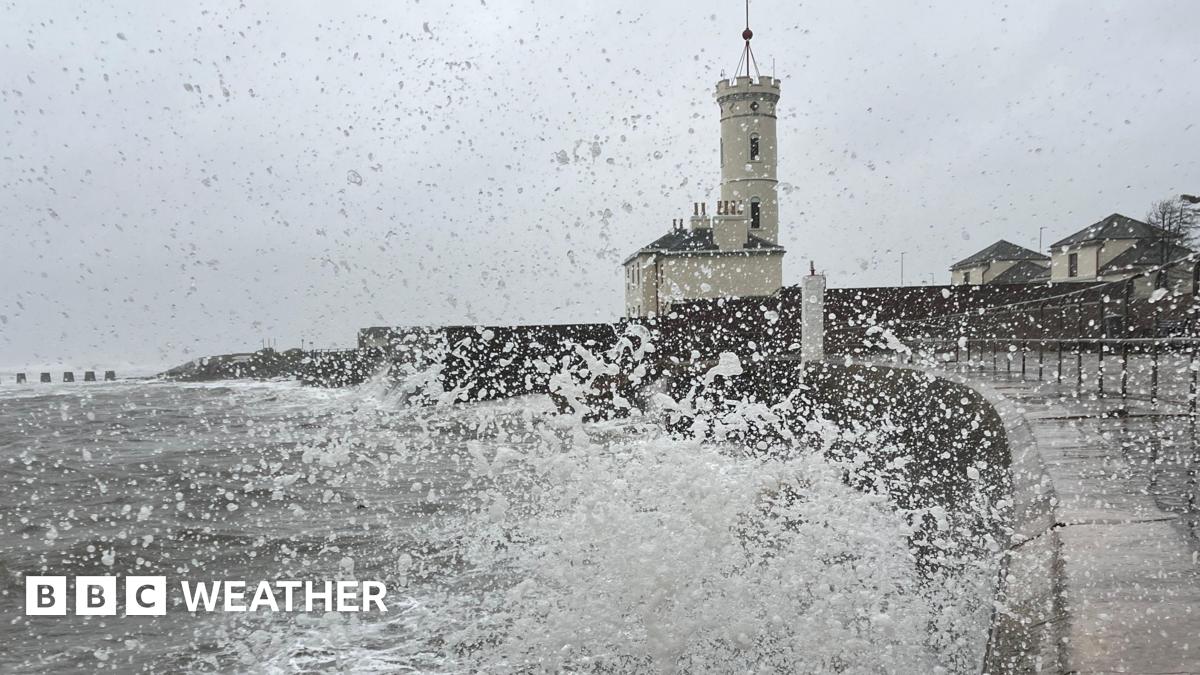

Monday marks ten years since Storm Abigail became the first officially named UK storm. Abigail lashed north‑west Scotland from 12 to 13 November 2015 with gusts up to 84 mph (135 km/h). Since that first naming, the Met Office, working with Met Éireann and the Dutch KNMI, has applied names to 70 storms.
Each September the three agencies publish a new A–W list of names for the season that runs from autumn through to the following summer; Q, U, X, Y and Z are left out. In recent years the public has also been invited to suggest names. The lists follow the US National Hurricane Center convention used for Atlantic storms.
Why name storms?
Naming storms is a public‑safety measure intended to make severe weather easier to remember, report and act on. Before formal naming, big storms were often recalled by the day they struck (for example the Burns Day storm of 1990 or St Jude’s Day 2013). Will Lang, Chief Meteorologist at the Met Office, has described storm naming as more than a label — a tool to increase awareness and help people follow warnings. The approach appears to work: when Storm Floris hit in August 2025, 93% of people in the amber alert area said they were aware of the warning.
When and why names are assigned
Names are given based on expected impacts, using the Met Office’s National Severe Weather Warnings service. Forecasters judge both the likely severity of damage and disruption and the probability of those impacts occurring. Names are usually applied when an amber, and occasionally a red, warning is likely. While strong winds are a common trigger, heavy rain and snow are also criteria: for example, storms Bert and Darragh (2024) and Storm Babet (October 2023) were notable chiefly for intense rainfall and flooding. Storm Desmond in 2015 produced the highest daily rainfall recorded for a named UK storm, at 267 mm.
Notable examples and cross‑border naming
Some named storms have had significant impacts. Storm Eunice (February 2022) prompted two rare red warnings; it formed part of a run of three named storms in a single week (Dudley, Eunice and Franklin) and caused major damage including harm to the O2 Arena roof. Storm Éowyn (January 2025) was described as the strongest windstorm in over a decade, with red warnings for Northern Ireland and parts of Scotland; it was named three days ahead of arrival and widespread media coverage helped to raise public awareness.
Because Atlantic and north‑west European systems often affect several countries, another agency may name a storm before the Met Office if that country is expected to suffer the worst impacts. Storm Jocelyn (January 2024) is one example that did more damage in the Republic of Ireland than in the UK.
How names are chosen and used
The A–W lists aim to reflect the diversity of the three nations and include public nominations. Recent choices include Bram (inspired by Bram Stoker), Dave (a public nomination with a humorous backstory) and Ruby (nominated in memory of a grandmother). Because lists always start at A, names later in the alphabet are rarely reached: no UK season has used more than 12 names. The busiest season in the past decade was 2023/24, which finished with Storm Lilian; the quietest was 2022/23, which only saw Antoni and Betty named.
Names assigned elsewhere are retained when systems reach the UK. Ophelia, an ex‑hurricane named by the US National Hurricane Center, brought gusts up to 90 mph when it arrived in October 2017. Storm Herminia kept its Spanish name when it crossed the UK in January 2025. That cross‑naming can cause the Met Office list to be skipped: for example, after Amy and a French‑named Benjamin, the next UK name became Bram rather than Chandra.
Climate change and future risk
Detecting long‑term changes in the frequency or intensity of windstorms is challenging because natural variability is large; there is not yet clear evidence of an overall rise or fall in the number or strength of UK windstorms. However, scientists are more confident that rising sea levels will increase coastal impacts from storm surge and high waves, and a warmer atmosphere typically produces heavier rainfall when storms occur, raising flood risk.
Overall effect
Across ten years of naming, the practice has become a standard part of severe‑weather communications in the UK and nearby countries. It does not alter the storms themselves, but it has helped to systematise warnings, focus media coverage and improve public recall and engagement with alerts — all contributing to public‑safety efforts as the region faces ongoing weather variability and growing coastal risks.