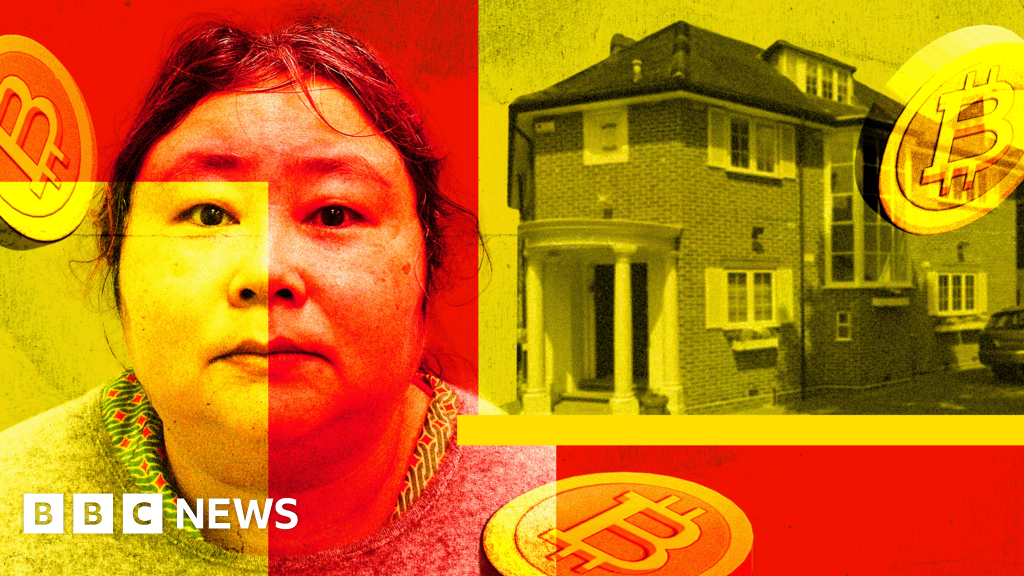

A woman accused of converting money stolen from thousands of Chinese pensioners into billions of pounds worth of cryptocurrency is due to be sentenced this week after pleading guilty to charges linked to money laundering.
Prosecutors say Qian Zhimin, 47, founded Lantian Gerui (also known as Bluesky Greet) in China and used the company’s promises of high returns from health-tech projects and cryptocurrency mining to lure more than 100,000 mainly middle-aged and elderly investors. Documents from Chinese prosecutions show deposits to the scheme totalled more than 40bn yuan (about $5.6bn, £4.2bn), and UK investigators describe Lantian Gerui as an elaborate fraud that used steady small payouts to encourage reinvestment and recruitment.
Victims told the BBC World Service they hope British authorities can recover some of their money. “If we can gather all the evidence together, we hope the UK government, the Crown Prosecution Service and the High Court can show compassion,” said one investor who asked to be called Mr Yu. He says his marriage broke down after the fraud and that the Bitcoin seizure is the only realistic chance to recoup losses.
Qian is accused of fleeing China in September 2017 on a forged passport as Chinese police began investigating the company. She settled in north London, renting a mansion on the edge of Hampstead Heath at more than £17,000 a month and presenting herself as an antiques and diamond heiress. Police found she employed staff to convert her cryptocurrency holdings into spendable assets; a former takeaway worker, Wen Jian, later admitted laundering money on her behalf and was sentenced to six years in prison.
As Bitcoin’s price rose, Qian’s crypto holdings—seized by the Metropolitan Police after a raid on her Hampstead rental—were able to produce the returns her company had promised, giving the scheme the appearance of legitimacy. The raid uncovered hard drives and laptops holding tens of thousands of Bitcoin, believed to be one of the largest single crypto seizures in UK history. The value of that haul has multiplied more than 20-fold since she arrived in Britain.
Investigators say Lantian Gerui used daily token payouts, roughly 100 yuan, to build investor confidence; those payments were funded from new investors’ money rather than mining profits, a former employee testified. Marketing campaigns targeted the lonely and patriotic, staging mass meetings, banquets and even events at prominent venues; endorsements and high-profile backers were used to bolster trust. Investors who recruited others were rewarded, helping the scheme expand to an estimated 120,000 people.
Qian cultivated secrecy, meeting only the largest backers—those who invested at least 6m yuan—at private events. Victims describe family savings and loans poured into the scheme after promises such as “get rich while lying down.” One investor, Mr Li, said he and relatives invested about 10m yuan after being told the business would secure wealth for three generations.
A Chinese police investigation in mid-2017 led to payouts being suspended. Company managers allegedly reassured investors and urged them not to contact authorities while Qian fled. In a diary recovered by investigators, she sketched ambitious plans including founding an international bank, buying a Swedish castle and seeking influence in the unrecognised microstate of Liberland.
Qian was arrested in York in April last year. She initially denied wrongdoing, claiming she was the target of a Chinese crackdown on crypto entrepreneurs and disputing evidence brought from China. At her trial in September she unexpectedly pleaded guilty to illegally acquiring and possessing cryptocurrency.
The future of the seized Bitcoin will be decided in a civil “proceeds of crime” case due to begin in earnest early next year. Thousands of Chinese investors intend to file claims, but lawyers warn many will face difficulties proving their losses: some payments went to local promoters who then passed funds up the chain, rather than directly to the company. It is also unclear whether successful claimants will be repaid the original amounts they invested or sums reflecting the cryptocurrency’s subsequent appreciation.
Any money not claimed by successful civil claimants would normally revert to the UK government. The Crown Prosecution Service has said it is considering a compensation scheme for those without representation in the civil case but has not provided details. The Treasury has not commented on what it would do with any leftover funds.
The personal toll on victims has been severe. Mr Yu said his marriage collapsed and his relationship with his son is now limited. Lawyers say some investors were left without funds for food or medicine; one woman from Tianjin reportedly died after leaving hospital because she could not afford treatment. Mr Yu wrote a poem in memory of victims, ending: “Let us be pillars, holding up the sky / Rather than sheep, to be led and misled.”
The sentencing this week will mark a key step in the criminal case. The longer civil proceedings will determine whether and how victims can reclaim losses from the vast holdings of cryptocurrency seized by UK authorities.