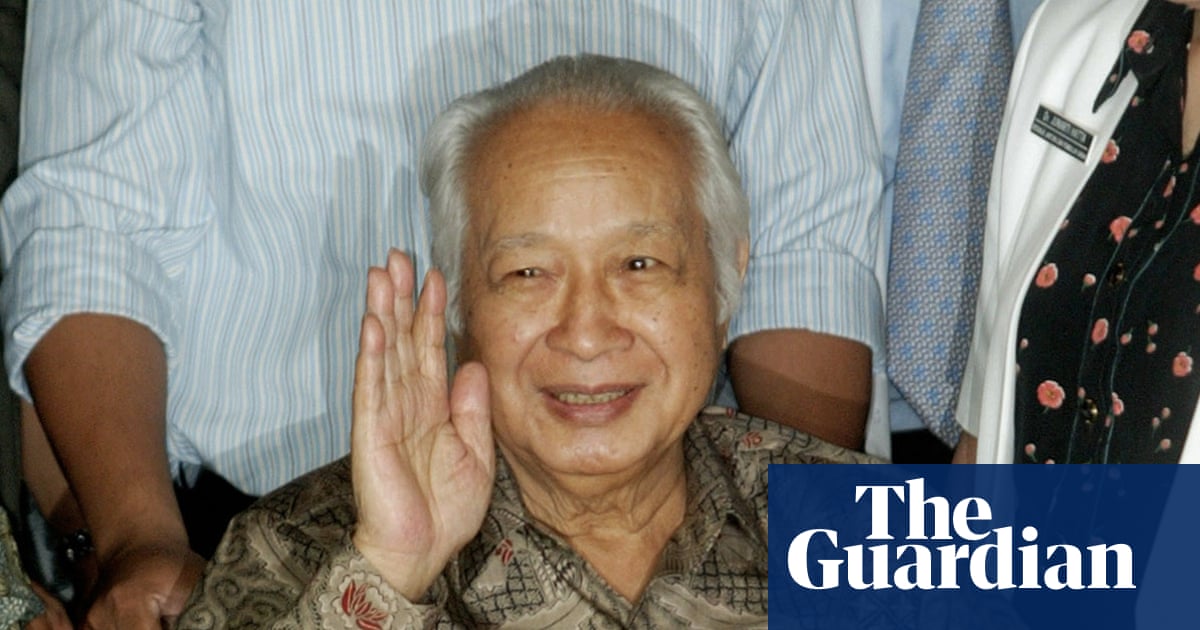

Indonesia has awarded the title of national hero to former authoritarian leader Suharto, a move that has provoked accusations of historical revisionism in the world’s third-largest democracy.
The honour was conferred at a ceremony presided over by President Prabowo Subianto, Suharto’s ex‑son‑in‑law, despite protests from pro‑democracy activists and relatives of those affected by Suharto’s decades in power. Prabowo presented the award to Suharto’s daughter and son at the state palace in Jakarta.
During the event an announcer described Suharto as “a prominent figure from Central Java province, a hero of the struggle for independence,” noting his prominence since the independence era. Indonesia declared independence in 1945 from the Netherlands and Japan.
Suharto, who ruled for more than three decades, was forced from power amid mass protests and deadly riots during the 1998 economic crisis. He died in 2006 at the age of 86. His long rule was characterised by widespread corruption, censorship and persistent accusations of mass human rights abuses, most notably the killings of suspected communists in 1965–66.
Prabowo, a former special forces commander who was dismissed from the military in the same year Suharto fell amid allegations over the abduction of pro‑democracy activists, has long praised his former father‑in‑law. He denies any wrongdoing in connection with the abduction claims. Since taking office last year, Prabowo has faced criticism over a perceived increase in the military’s role in civilian life.
Defending the decision, culture minister Fadli Zon pointed to Suharto’s military operations, including fights against the Dutch in 1949, as justification for the honour and rejected suggestions of Suharto’s involvement in the 1965–66 killings, which are estimated to have left at least hundreds of thousands dead.
Indonesian activists reacted with shock. “How could the man most responsible for one of history’s greatest genocides, when he seized power, be made a national hero? It’s utterly absurd,” said Usman Hamid of Amnesty International Indonesia. “It is a blatant whitewashing of historical crimes. This decision ignores the aspirations of civil society, including victims of human rights violations who continue to demand justice.”
The decision sparked street protests in Jakarta, where demonstrators gathered near the presidential palace holding placards reading “Stop the whitewashing of the general of butchery” and “Thousands died but the country chose to forget.” The government did not immediately address accusations that the honour amounts to revisionism.