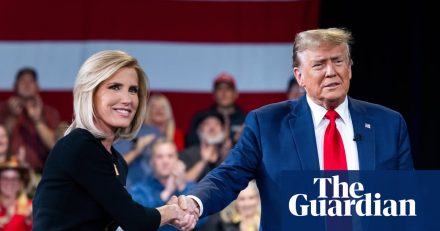
US President Donald Trump has filed a multi-billion-dollar defamation lawsuit against the BBC over an edit of his 6 January 2021 speech used in a Panorama documentary. Court documents filed in Florida say Trump accused the broadcaster of defamation and of violating a trade practices law, seeking $5bn (£3.7bn) in damages on each claim.
The BBC has apologised to Trump but rejected his demands for compensation and said there was no basis for a defamation claim. Trump’s legal team alleges the BBC “intentionally, maliciously, and deceptively” doctored his speech. The broadcaster had not yet formally responded to the lawsuit.
Trump had said last month he planned to sue after the documentary, which aired in the UK ahead of the 2024 US election. “I think I have to do it,” he told reporters, adding: “They cheated. They changed the words coming out of my mouth.”
In his 6 January 2021 speech, delivered before the US Capitol riot, Trump told the crowd: “We’re going to walk down to the Capitol, and we’re going to cheer on our brave senators and congressmen and women.” More than 50 minutes later he said: “And we fight. We fight like hell.” The Panorama programme showed a clip that combined lines to present him as saying: “We’re going to walk down to the Capitol… and I’ll be there with you. And we fight. We fight like hell.” The BBC acknowledged the edit gave “the mistaken impression” he had “made a direct call for violent action” but maintained there was no defamation basis.
A leaked internal BBC memo in November criticised how the speech was edited and prompted the resignations of director general Tim Davie and head of news Deborah Turness. Before the lawsuit was filed, BBC lawyers had responded at length to Trump’s claims, arguing there was no malice in the edit and that Trump was not harmed by the programme, noting his re-election shortly after it aired. They also said the BBC did not have rights to, and did not, distribute the Panorama programme on its US channels; while the documentary was available on BBC iPlayer, it was restricted to UK viewers.
Trump’s suit cites agreements the BBC had with other distributors to show content, specifically one with a third-party media corporation that allegedly had licensing rights to the documentary outside the UK. The BBC and the named corporation have not responded to those claims. The complaint also asserts people in Florida may have accessed the programme using a VPN or via the streaming service BritBox, saying the programme’s publicity and increased VPN usage in Florida make it likely citizens there viewed the documentary before it was removed.