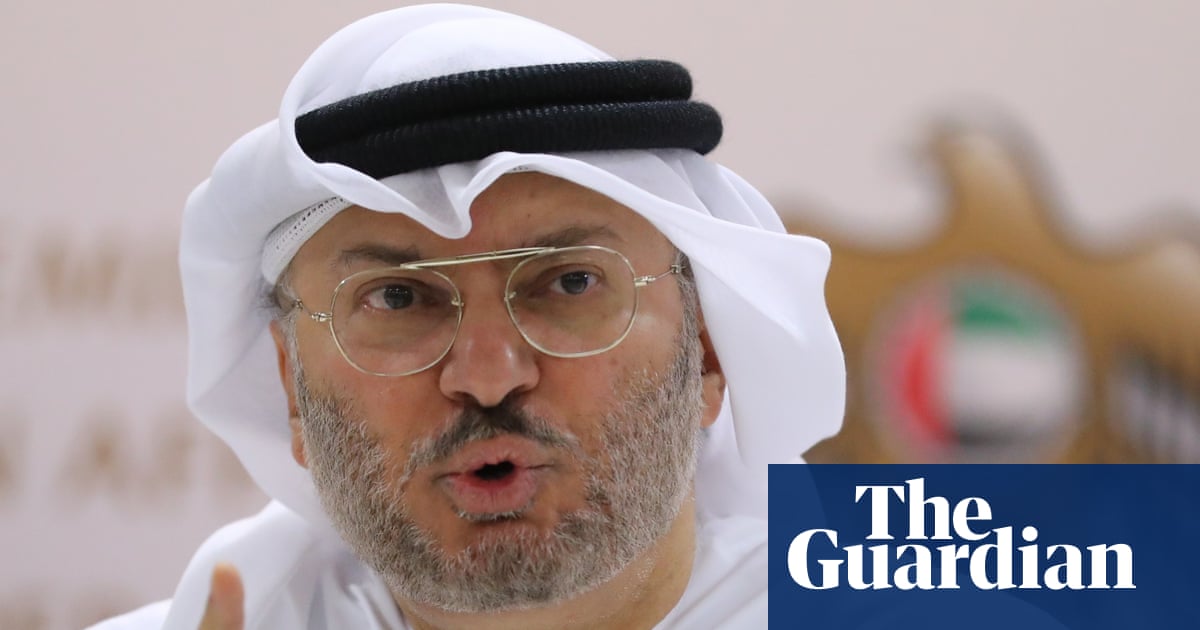

Plans for a UN-mandated international force to disarm Hamas in Gaza are facing growing resistance after the United Arab Emirates said it will not join without a clear legal framework. UAE senior envoy Anwar Gargash announced in Abu Dhabi that the country does not see a clear framework for the stabilisation force and will therefore not participate, while pledging continued political engagement and humanitarian support.
Several potential contributors are already unwilling or excluded. Israel has ruled out Turkish involvement, Jordan has said its troops will not take part, and Azerbaijan declined a planning meeting in Turkey and said it would not contribute unless a full ceasefire is in place.
The UAE position highlights broader Arab objections to a US-drafted resolution circulated at the UN in New York. That draft would make a US-directed stabilisation force the principal security guarantor in Gaza after an Israeli withdrawal. Arab states want a leading role for a Palestinian civilian police force and stress that, under international law, foreign troops should not deploy in occupied Palestinian territory without explicit Palestinian consent, arguing that a force imposed without that consent risks entrenching an unlawful occupation.
Jamal Nusseibeh, a Palestinian American co-author of a Palestinian armistice plan, says any force must enforce international law and aim to end the occupation rather than stabilise it. He argues deployment should be at Palestine’s request, cover all occupied territory including the West Bank, and focus on creating conditions for a sovereign Palestinian state. The US draft does not mention the West Bank, a Palestinian state, or a two-state solution, positions that Israel opposes.
Formal talks on the stabilisation mandate, including command and control arrangements, have begun in New York and are expected to be protracted, raising the prospect of a security vacuum in Gaza. The US has proposed to lead the force but would provide only limited ground troops, and has already assumed a central role in coordinating humanitarian deliveries to Gaza from a new civil-military coordination centre based in Israel.
The draft describes the force’s mission as working with a newly trained and vetted police to secure borders, demilitarise Gaza, destroy military infrastructure, and permanently decommission weapons held by non-state armed groups. It would report to a so-called board of peace chaired by former US president Donald Trump rather than to the UN, and would be authorised to use all necessary measures to meet its objectives.
Arab states, including Qatar, say the mandate is too broad and worry Hamas would only disarm to fellow Palestinians, likely within a civilian policing framework and only once occupation is perceived to have ended. They also fear the draft gives the stabilisation force a governance role in Gaza that many expect to be filled by a Palestinian technocratic committee working with a reformed Palestinian Authority.
The proposal envisages a transitional governance administration in Gaza until the PA completes reforms judged acceptable by the board of peace. The resolution underscores the importance of humanitarian aid through the UN, the International Committee of the Red Cross and the Red Crescent, but includes a clause allowing exclusion of any organisation found to have misused aid, a formulation critics say could be used to bar UNRWA from distributing assistance.
France and Saudi Arabia are pressing for the resolution to reference a Palestinian state, with Saudi officials calling such language a prerequisite. Saudi Crown Prince Mohammed bin Salman is due to visit the White House on 18 November. Palestinian Authority president Mahmoud Abbas met French president Emmanuel Macron in Paris to discuss the PA’s role.
The draft does not give the UN or the 15-member Security Council supervisory authority over the force or its implementation, and it does not specify funding. The US expects Gulf states, led by Saudi Arabia, to shoulder much of the cost. Israel has sought written US guarantees allowing it to re-enter Gaza if it judges disarmament inadequate, following a model used in Lebanon. Four of the original 251 Israeli hostages remain unreturned. Separately, Israel has proposed dividing Gaza so reconstruction could begin in areas under its control, though Western diplomats say that is not part of the US plan.