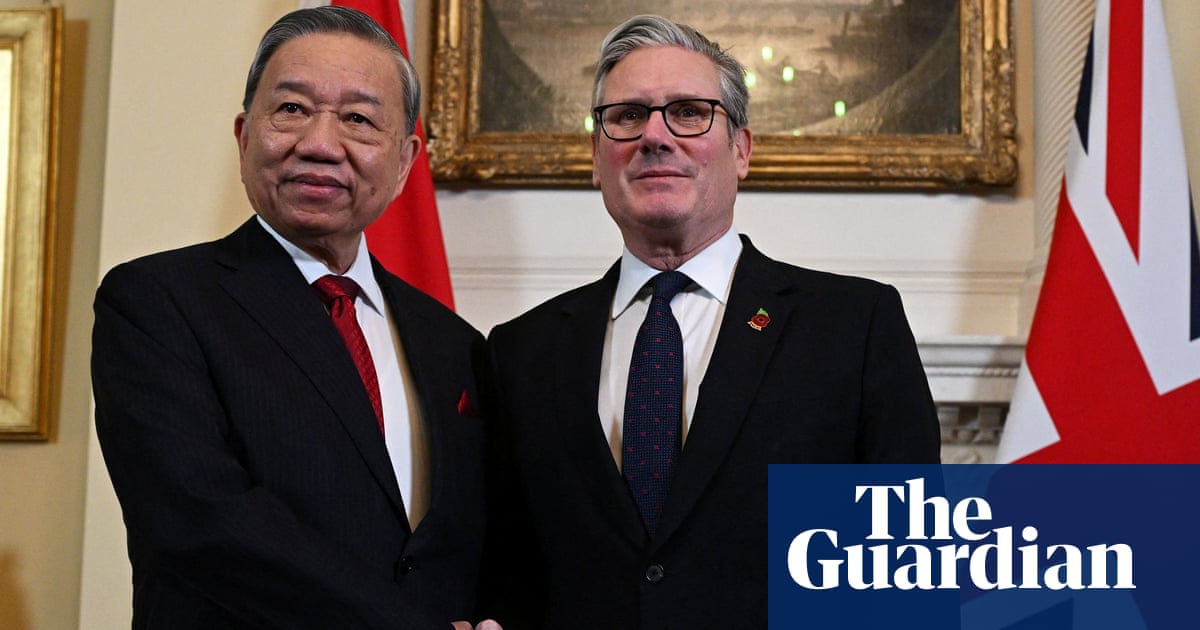

The UK and Vietnam have signed a new migration agreement that will speed up deportations of Vietnamese nationals who arrive in Britain by irregular means, Downing Street announced.
The deal follows a sharp rise in clandestine crossings last year, including people arriving on small boats and hidden in lorries. Vietnamese nationals were the largest single group arriving by small boat in the first three months of 2024 and the fourth largest group across the whole of 2023. April 2024 figures showed Vietnamese accounted for around 20% of small boat arrivals, a roughly tenfold increase on the same month the year before.
Home Office statistics also record 599 Vietnamese people referred to the national referral mechanism as potential victims of modern slavery between April and June 2024 — the second-highest nationality after Eritreans.
No 10 described the arrangement as the strongest migration deal Vietnam has signed with another country and said it could lead to up to four times as many returns of Vietnamese nationals who have no legal basis to remain in the UK. Officials say processing times for migrants’ documents will be cut substantially — by about 75% for cases with supporting evidence and, eventually, by nearly 90% — by removing administrative barriers.
Key elements include sharing biometric data to confirm identities, speeding up the issuance of travel and identity documents, and stepped-up cooperation to target and dismantle criminal networks involved in trafficking and smuggling.
Prime Minister Keir Starmer signed the agreement at Downing Street alongside To Lam, general secretary of the Communist Party of Vietnam, during a visit intended to deepen bilateral ties. The Vietnamese leader spoke through an interpreter. Downing Street said the prime minister emphasised that the agreement would make returns faster and more effective and would have a tangible impact on people’s lives.
The government also highlighted its removals record: in its first year in office it says it removed 35,000 people with no right to remain, including 5,200 foreign national offenders, a rise of about 14% on the previous year.
Human rights concerns remain prominent. The BBC has reported that a Vietnamese journalist, a national of Vietnam, has been unable to leave the country for several months after travelling to visit family and renew a passport. Human Rights Watch has documented more than 170 people described as political prisoners in Vietnam, detained for peaceful activities ranging from activism to online expression.
Downing Street framed the agreement as an example of practical international cooperation to reduce illegal migration and disrupt criminal networks, while rights groups and media organisations continue to monitor implications for individuals and for freedom of expression in Vietnam.