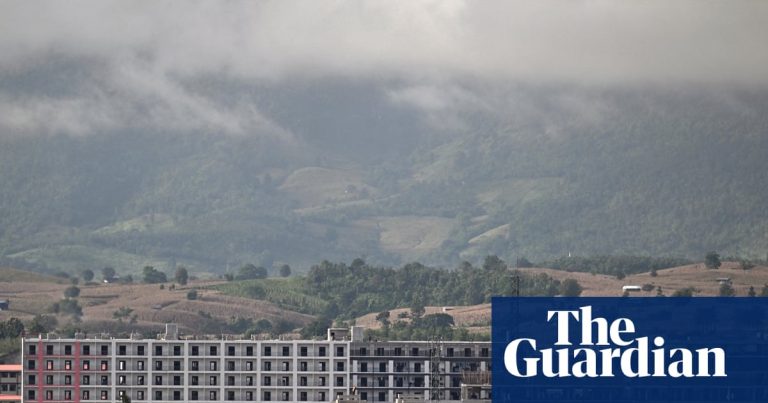
At least 90 people have died following a gas explosion at the Liushenyu Coal Mine in Shanxi province, state media report. The blast occurred at 19:29 local time on Friday (22:29 GMT), when 247 workers were said to be on duty.
More than 100 people were pulled to safety and hundreds of rescuers were dispatched. State media say 27 people remain in hospital, one in critical condition and the others with minor injuries. Authorities reported that most victims were affected after inhaling poisonous gas, though officials have not confirmed the exact substance at the scene.
Rescuers discovered levels of carbon monoxide — a highly toxic, odourless gas — that “exceeded limits,” according to state outlets. That finding sits alongside first-hand accounts from survivors: injured miner Wang Yong told state media he smelled a sulphur-like odour he compared to blasting, saw a sudden plume of smoke, and watched colleagues collapse from fumes before losing consciousness himself. “I lay there for about an hour or so before I came round on my own. I woke up the person next to me and we got out together,” he said.
Chinese President Xi Jinping ordered that no effort be spared to treat the injured, search for survivors and investigate the cause of the blast, saying those responsible should be held to account. Some members of the mine’s management team have reportedly been detained as part of the probe.
China’s Ministry of Emergency Management sent 345 personnel from six rescue teams to the site. State media say the operation has been hampered by water building up near the explosion area and by discrepancies between the mine’s blueprints and actual underground conditions, which have limited access to parts of the workings.
The Liushenyu mine was listed in 2024 by the National Mine Safety Administration among operations with “severe safety hazards.” The operator, Tongzhou Group, reportedly received two administrative penalties in 2025 over safety issues.
Shanxi province accounts for more than a quarter of China’s coal output. The accident is the deadliest mining disaster in China since 2009 and recalls previous recent tragedies: a 2023 open-pit collapse in Inner Mongolia killed 53 people, and a 2009 blast in Heilongjiang killed more than 100.
China remains the world’s largest coal consumer and top emitter of greenhouse gases even as it expands renewable power. The incident comes days after high-profile visits to China by US President Donald Trump and Russian leader Vladimir Putin, underscoring the political attention on the country while authorities carry out the rescue and subsequent investigation.