
Summary
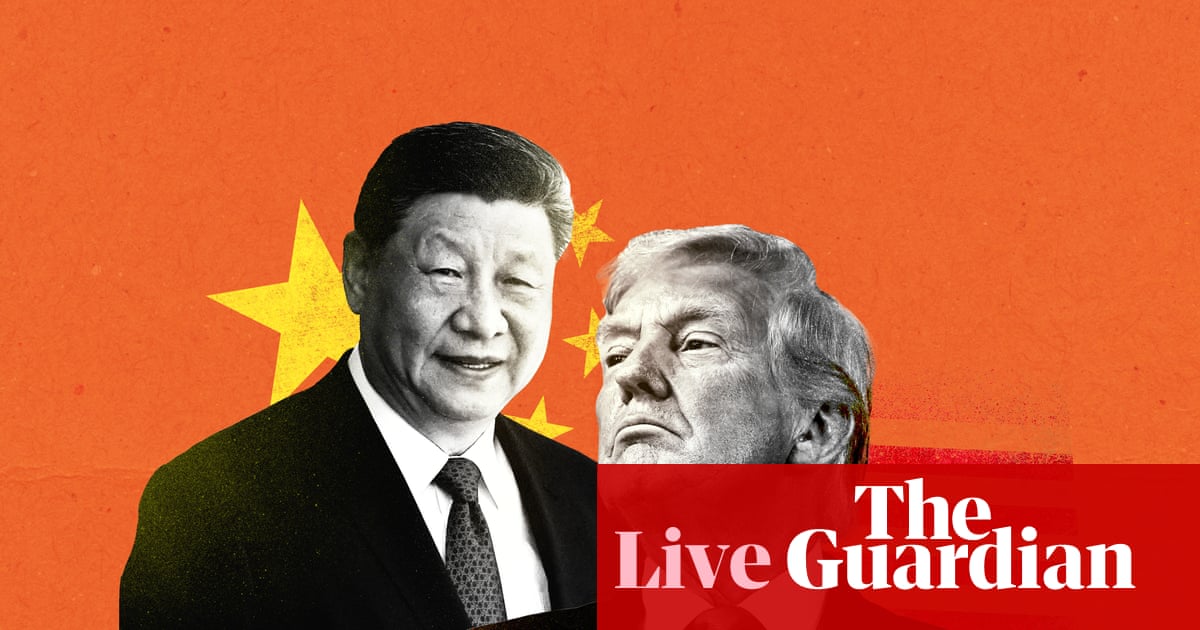
Donald Trump and Xi Jinping met in Busan, South Korea, for their first face-to-face talks since 2019. After about one hour and 40 minutes of private talks, both leaders emerged describing progress on trade, energy and security issues. Trump called the meeting a “great success” and said a number of outstanding disputes had been settled or placed on a short-term footing.
Main outcomes described by the US president
– Rare earths: Trump said the confrontation over China’s recent export controls on rare earths had been “settled” with a one‑year agreement to keep supplies flowing; he said he expected the arrangement to be extended. Rare earths are critical minerals used in electronics, defence and renewable technology.
– Tariffs and fentanyl: Trump said China agreed to step up efforts to curb precursor chemicals used to make fentanyl. In response, the US would reduce a fentanyl‑linked tariff from 20% to 10%, lowering what he described as the overall tariff burden from roughly 57% to 47% in a one‑year deal.
– Agriculture and energy: Trump said Beijing would resume buying US soybeans. He also said China had agreed to begin the process of purchasing US energy, with talks under way about large oil and gas deals, including potential purchases from Alaska.
– Visits: Trump announced he will visit China in April and said Xi would visit the US sometime afterwards.
– Other issues: Trump said the leaders discussed Ukraine and agreed to cooperate to try to reduce casualties. He also said Taiwan “never came up” during the meeting.
Chinese response and wider confirmation
Chinese state media reported that Xi described a “consensus” with Trump on economic and trade issues and urged both sides to finalise follow‑up steps quickly. China’s commerce ministry later outlined a set of understandings said to cover tariff adjustments, a temporary suspension or delay of certain export controls and commitments on agricultural and energy purchases; Chinese outlets called for the outcomes to be implemented and refined by negotiating teams.
Context and background
The meeting followed a negotiators’ agreement on a trade “framework” reached days earlier in Kuala Lumpur. That framework reportedly aimed to avoid the threatened imposition of 100% US tariffs and to defer some Chinese export curbs. High on the agenda in Busan were rare earths — where China accounts for the bulk of global processing capacity — and a series of overlapping US tariffs and export controls that have strained global supply chains.
What was not resolved or remains unclear
– Details and verification: Much of the deal’s substance and Chinese confirmation came via state media and US statements; full texts or bilateral implementation plans were not released immediately. Observers noted that markets responded cautiously: Chinese stocks and the yuan rose on hopes of détente but the yuan later eased after investors said there were few fresh, verifiable details.
– Chips and tech exports: Trump said the talks covered semiconductor trade — including Nvidia chips — but he did not confirm specific approvals for the company’s latest AI chips. He framed the US role as an “arbitrator or referee” on some chip sales.
Flashpoints and other headline items
– Nuclear testing post: Minutes before the Busan meeting, Trump posted on his social platform that he had ordered the US defence apparatus to “start testing our Nuclear Weapons on an equal basis” with Russia and China. That post prompted immediate international reaction: a senior Russian lawmaker warned of new unpredictability, and China’s foreign ministry urged the US to respect a de‑facto moratorium and preserve strategic stability. It was not clear whether Trump meant explosive nuclear tests (which have not been carried out by any major power in decades) or other kinds of weapons tests.
– South Korea submarine announcement: Trump also said he had authorised South Korea to build a nuclear‑powered submarine and suggested parts of the project could involve a US shipyard. South Korean officials said no detailed technical plan had been finalised and the matter would require further discussion.
Market reaction
Energy and financial markets reacted modestly. Oil prices slipped slightly on the prospect of increased Chinese energy purchases and cautious investor interpretation of the trade outcomes. Some investors remained sceptical the agreement marks a permanent end to tensions.
What happens next
Both sides said economic and trade teams will refine and finalise follow‑up work. Trump and Xi described their meeting as producing a consensus that now needs concrete implementation. Negotiators will be expected to turn the verbal outcomes into written agreements and to begin the internal approval processes required in Washington and Beijing. Observers will watch closely for formal documentation, verification on rare‑earth shipments and details of tariff and export‑control adjustments.
Reporting note
The immediate accounts come from statements by the US president and Chinese state media. Many of the announcements were described aboard Air Force One and in official Chinese briefings; full written agreements were not published at the time of these reports, and government teams on both sides were expected to hold further talks to work out implementation.