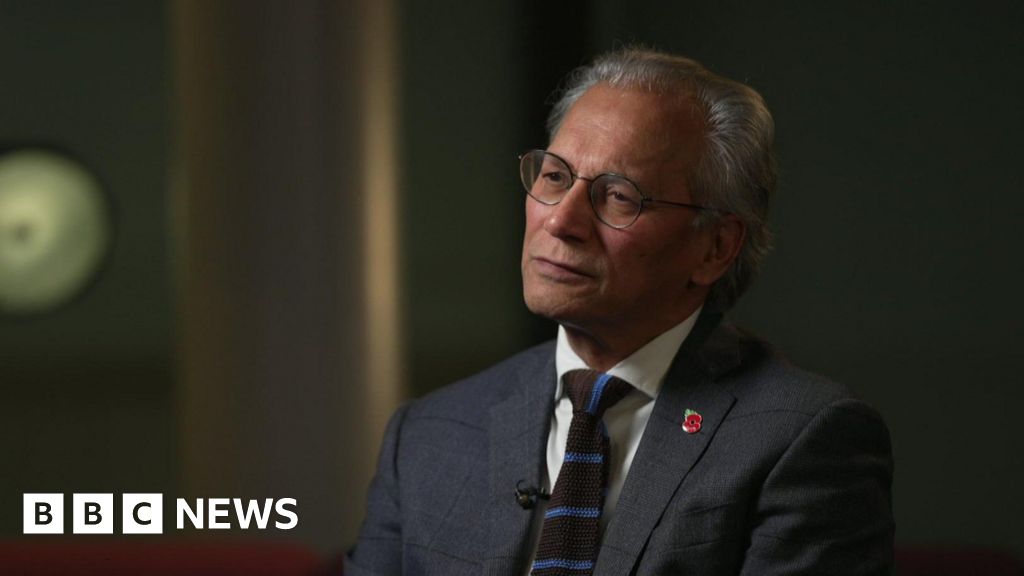

BBC chair Samir Shah has apologised for an “error of judgement” over the way a clip of former US President Donald Trump’s January 6 speech was edited in a Panorama documentary broadcast last year. His letter to the Culture, Media and Sport Committee notes more than 500 complaints have been lodged since a leaked memo criticised the edit. Shah’s statement follows the resignations of Director-General Tim Davie and BBC News CEO Deborah Turness.
Cover note to Caroline Dinenage, Chair of the Culture, Media and Sport Committee
Dear Caroline,
Please find attached a fuller letter to you and the Committee. You will be aware that Tim Davie and Deborah Turness both resigned yesterday. I have already expressed my gratitude for their service: Tim has led the BBC and the wider creative industries with integrity and skill, and Deborah has guided BBC News through demanding times with commitment and a clear vision.
The Board and I will work to ensure a smooth leadership transition as we appoint a new Director-General and continue our work to serve all audiences and secure the BBC’s future. Both letters will be published by the BBC.
Samir Shah
BBC Chair
Main letter
Dear Caroline,
Thank you for your letter of 4 November.
I am writing to set out the BBC’s position on several matters raised in the last week following the leak of a letter from Michael Prescott, a former external adviser to the Editorial Guidelines and Standards Committee (EGSC). I attach Mr Prescott’s letter and explain the Board’s consideration of the issues he raised, and I respond to the questions you posed.
We have taken Mr Prescott’s concerns seriously and reviewed them carefully. The Board discussed his memo on 17 October, and I have since met him to talk through next steps. Coverage of his memo has sometimes suggested he “uncovered” a set of stories the BBC tried to “bury.” That impression is incorrect. The matters he cites were already examined by the EGSC and the Board. The EGSC’s role is to scrutinise output when concerns are raised, whether internally or externally, and to decide what action is needed. Its job is to look at problems, not to collect praise.
Some mistakes are isolated; others point to deeper issues. Identifying these problems and making changes is essential to continuous improvement. Over the three years Mr Prescott served as an adviser, the BBC has published corrections where needed, revised editorial guidance, made leadership changes where appropriate, and taken formal disciplinary steps when required. Those actions do not negate the volume of high-quality journalism produced across television, radio, online, and internationally during the same period, but they do show the Board’s willingness to act.
Mr Prescott’s memo draws on research commissioned by the EGSC. While I will also reference that research here, his memo is a personal account of meetings he attended and does not offer a complete picture of the discussions, decisions and follow-up actions. I want to address some specific points and clarify what the EGSC and the Board have done.
The EGSC accepts that there are occasions when BBC reporting falls short or needs more context. In several items highlighted by Mr Prescott—such as the car insurance story, coverage of insecure jobs, the Scarlett Blake case, reporting on the ICJ order, and casualty figures in Gaza—the EGSC’s commissioned research found shortcomings. Responses have included published corrections and clarifications, new editorial guidance, and, in some instances, disciplinary measures.
The EGSC also identified wider concerns, for example in the BBC Arabic service and in long-form journalism. We have taken action: the Arabic team has been restructured, a new Arabic-speaking Head of Editorial Quality and Standards has been appointed in the World Service, and a social media research unit has been created to verify contributors on that service. For domestic output, BBC News has appointed an Executive Editor of Editorial Quality and Standards, and a Director of News Documentaries and Long Form Journalism will shortly be appointed to oversee current affairs output. These leadership changes are intended to address systemic issues, not just individual errors. The EGSC will continue monitoring progress—for example, it will receive an update on BBC Arabic this week—and if problems persist, we will take further steps.
Mr Prescott’s memo does not present the full range of evidence the EGSC considered. For instance, while the EGSC noted an issue with an Iowa poll, it also concluded that the BBC’s overall polling coverage was strong, particularly online. On coverage of sex and gender identity, the EGSC found much reporting met the BBC’s standards of impartiality and accuracy.
One specific case I will address is the editing of President Trump’s January 6 speech in Panorama’s Trump: A Second Chance? The edit has attracted considerable attention. The EGSC discussed it in January 2025 and again in May 2025; members of the Committee and Mr Prescott raised concerns about how the programme was edited. BBC News explained the edit’s purpose was to convey what the speech meant to President Trump’s supporters and to help Panorama viewers understand how it was received on the ground. At the time, the matter was treated as part of a broader review of the BBC’s US election coverage rather than as an isolated programme complaint, partly because it had not then attracted significant audience feedback and had been broadcast before the US election. The review’s findings were shared with the Panorama team, including the rationale for the edit. With hindsight, it would have been better to take more formal action then.
Since Mr Prescott’s memo became public, that edit has resulted in more than 500 complaints, which are now being processed in the normal way. The BBC has reflected further and concluded that the edit did create the impression of a direct call for violent action. We apologise for that error of judgement.
You asked about the high-level review of the effectiveness of the EGSC. I initiated that review in June, before Mr Prescott’s memo emerged. I have held discussions about how to improve EGSC processes and its effectiveness, including drawing on Chris Saul’s review work; that work is ongoing.
My aim is to strengthen EGSC so it acts more quickly, monitors agreed actions, and ensures implementation. The Committee’s remit will be broadened to cover all BBC output—because all programming must comply with editorial guidelines—and its composition will be changed to align with the new role and ensure clearer accountability. These changes will be presented to the Board in December.
In addition, we will:
– Revisit every item listed in Mr Prescott’s note and take further action where appropriate, publishing conclusions and actions taken where possible.
– Re-run internal reviews where measures have already been implemented to verify whether those changes are producing material improvements.
– Ensure online stories are amended where the EGSC has found they fell short of editorial standards.
I want to reassure you and the Committee that the BBC must defend impartiality. The policies and practices we have introduced, and those we will put in place as EGSC is reshaped, are intended to uphold the highest standards across video, audio and online content.
As Chair, I accept responsibility for this work. I hope this letter shows the Board has taken substantial action over the past three years and that I will personally ensure the BBC continues to make necessary improvements so it retains the public’s trust.
High-quality independent journalism matters now more than ever in a deeply polarised environment. The public needs impartial, truthful reporting grounded in verifiable evidence—this is the core public service mission of the BBC.
Yours sincerely,
Samir Shah
BBC Chair