
Nawal Khalil had volunteered as a nurse at El Fasher South hospital for three years. She was treating patients, including an elderly woman who needed a blood transfusion, when fighters stormed the facility after the city fell to the Rapid Support Forces (RSF).
“They killed six wounded soldiers and civilians in their beds — some of them women,” she says. “I don’t know what happened to my other patients. I had to run when they stormed the hospital.” Khalil, 27, was shot in her right foot and thigh as RSF fighters seized the nearby military headquarters. With her injuries untreated and no food, she walked for a day to reach Garney, having been left without her phone or money after fighters took them.
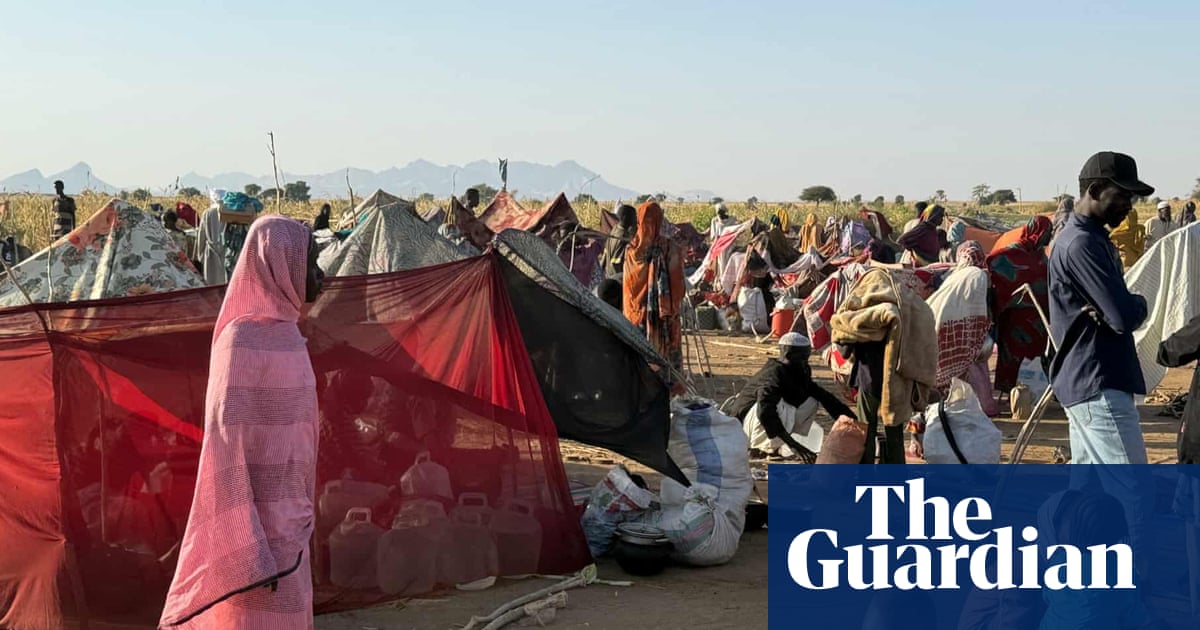
El Fasher, which had endured an 18-month siege, fell on Sunday. More than 1,000 people — including women and children — reportedly walked up to two days to reach the town of Tawila, about 55km west of El Fasher. Tawila is under the control of the Abdul Wahid Mohamed al-Nur faction of the Sudan Liberation Army (SLA‑AW), which has received and sheltered many of those fleeing the city.
The Joint Forces, allied with Sudan’s army, accused the RSF of killing more than 2,000 civilians since El Fasher’s fall. The UN said videos circulating showed “dozens of unarmed men being shot or lying dead, surrounded by RSF fighters.” These figures and footage have been cited by witnesses and organisations but remain subject to verification.
Thousands more civilians are reported to be trapped in Garney and other areas southwest of El Fasher, including former soldiers and members of allied armed groups. Survivors who reached Tawila said many detainees were being held after failing to pay ransom demands reportedly ranging from 5 million to 10 million Sudanese pounds (about £6,000 to £12,000). Those unable to pay were detained for days and some were released only after becoming gravely ill.
The SLA‑AW has reportedly permitted government troops fleeing El Fasher to enter Tawila on the condition they surrender their weapons. A local SLA‑AW commander said additional fighters had been deployed around Tawila to protect people escaping the city and to deter RSF advances toward retreating armed groups.
Several escapees described brutal treatment en route. Adam Yagoub, 28, a driver from Sennar, said he was captured by three militiamen on camels near Garney and narrowly avoided being killed. He showed injuries sustained when a fighter struck him with the butt of an AK‑47. “They wanted to cut my head off with a knife,” he said. One militiaman spared him after recognising him through a family connection. Eighteen people left El Fasher together, Yagoub said, but only eight reached Tawila; he believes the others were killed.
Yagoub also said he saw 22 bodies beside what he described as a “fake well” — a trap set by militias to lure dehydrated people searching for water. He alleged the militias killed the men there and removed the bodies to conceal them.
Other witnesses recounted attacks inside El Fasher’s hospital. A nurse who escaped said RSF fighters entered through one gate and opened fire in the emergency ward, killing at least eight patients. He said he fled through a different gate after being hit on the head with a rifle.
In a recorded statement, RSF leader Gen Mohamed Hamdan Dagalo (known as Hemedti) said any soldier or officer who “violated the right of any person” would be held accountable. Humanitarian and medical organisations, meanwhile, warned of a sharp increase in people in need of urgent care.
Many who escaped hid for hours near army artillery positions before moving west at night. Families already displaced inside the city, including residents of the Abu Shouk camp, were forced to flee again — some seeking temporary shelter in the Daraja Oula neighbourhood before continuing on to Tawila.
Survivors taken in Garney said captives were sometimes given water mixed with flour after walking long distances without supplies. People were reportedly separated by gender and by suspected affiliation: men believed to be fighters were detained, while some civilians were released or freed after paying ransoms.
Elements of the Sudanese army and allied groups are reported to continue resisting in the Jebel Wana area northwest of El Fasher after losing control of the city.
Médicins Sans Frontières (MSF) said its clinic in Tawila hospital was receiving a large influx of survivors. “More than 1,000 people arrived at night on foot and in trucks, after an extremely dangerous journey,” said MSF project coordinator Sylvain Penicaud. “Many were in a state of great weakness, suffering from malnutrition and dehydration.”
The fall of El Fasher and the reported killings, detentions and mass displacements have deepened an already severe humanitarian crisis in Darfur. Independent verification of the full scale of alleged abuses is difficult amid continuing insecurity, but witnesses, aid groups and UN officials all warn of widespread violence and urgent needs among those who have fled.