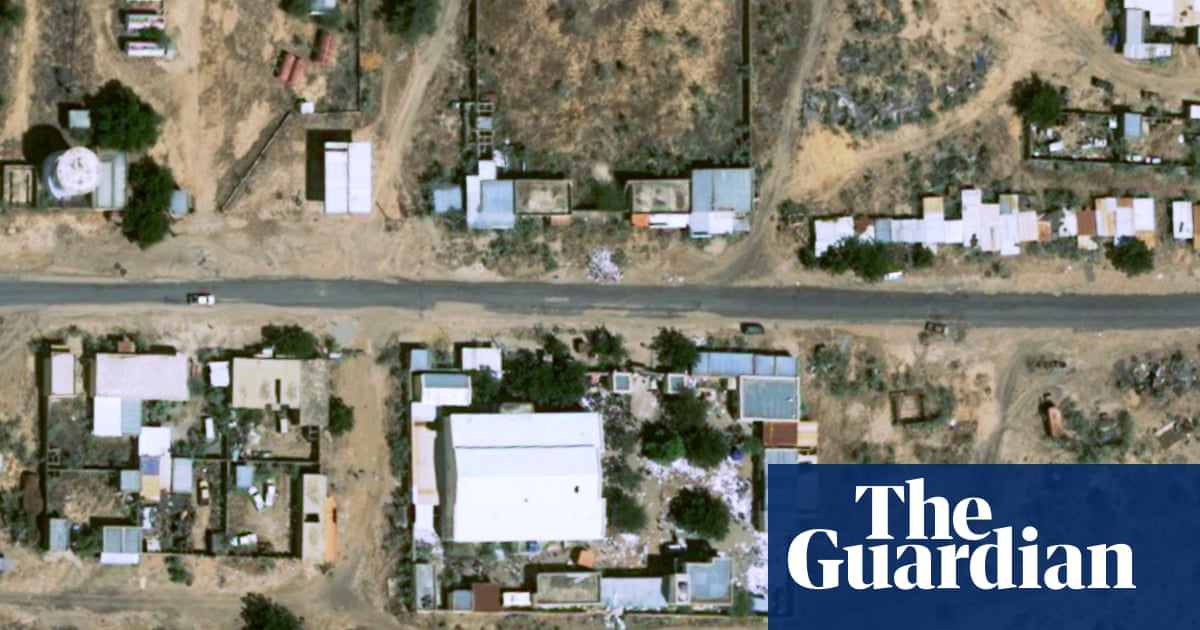

Sudan’s Rapid Support Forces are accused of killing hundreds of patients and staff inside a hospital in El Fasher after the paramilitary group said it had seized the city, the World Health Organization and the Sudan Doctors Network reported.
WHO director-general Tedros Adhanom Ghebreyesus said he was “appalled and deeply shocked” by accounts that more than 460 people may have been killed at the Saudi maternity hospital, while the Sudan Doctors Network said its monitoring team had found that RSF fighters “killed in cold blood everyone they found inside the Saudi hospital.”
The violence follows more than two years of open war in Sudan. Fighting began in April 2023 after a power struggle within the military, initially centered in Khartoum, and has since spread across the country. Sudan’s regular army controls much of the north and east and retook Khartoum in March 2025; the RSF now holds territory in the west and south-west and, with the army having withdrawn from El Fasher, controls all five regional capitals in Darfur.
El Fasher, once home to over a million people, has been besieged by the RSF since May 2024. Displaced-population camps near the city have suffered severe shortages: famine was declared at the Zamzam camp in August 2024, and when the RSF seized that camp in April authorities and aid groups said as many as 2,000 people were killed. Observers had warned that an RSF takeover of El Fasher could resemble the 2023 capture of Geneina, where thousands of civilians—many from non-Arab groups—were reportedly massacred.
The RSF traces its lineage to the Janjaweed militias that were implicated in mass atrocities in Darfur in the early 2000s. In January the US government formally concluded that the RSF had committed genocide. Many Sudanese still use the older Janjaweed name for the force.
Local allies of the army known as the Joint Forces said the RSF executed more than 2,000 unarmed civilians after taking El Fasher. RSF commander Gen Mohamed Hamdan Dagalo (Hemedti) acknowledged “abuses” by his forces in a Telegram post and said an investigation had been opened, but he gave no details.
Independent forensic and imagery analysis has raised further alarm. The Yale Humanitarian Research Lab examined satellite imagery of the hospital on October 27–28 and reported new clusters of white objects and areas of reddish discoloration adjacent to the facility that had not been present the day before. In two of the clusters the objects measured roughly 1.1–1.9 metres in length; the lab said these observations were consistent with large-scale killings. The same team reported signs consistent with mass killing at a detention site housed in a former children’s hospital and continued systematic killings near the city’s earthen defensive walls.
Caitlin Howarth, director of conflict analytics at the Yale lab, said it is not yet possible to establish a precise death toll in El Fasher but that the evidence points to numbers well beyond isolated incidents: “We’re not looking at small numbers, we’re looking at dozens and hundreds and, eventually, there will be thousands,” she said.
Survivors who escaped El Fasher describe widespread looting, extortion and sexual violence by RSF fighters. Many displaced people reportedly died attempting to flee across desert terrain toward camps and other safer areas, making an accurate count of victims difficult.
Witnesses interviewed by the Associated Press recounted house-to-house operations in which fighters beat and shot civilians, including women and children, and said many bodies lay in the streets. “It was like a killing field. Bodies everywhere and people bleeding and no one to help them,” said Tajal-Rahman, a man in his late 50s now sheltering in Tawila, a displacement camp west of El Fasher that has swelled to hundreds of thousands of people.
The scale and character of the reported killings have drawn international condemnation and raised urgent calls for independent investigations and humanitarian access, but insecurity and restricted movement in the region complicate efforts to confirm the full scope of the violence. The Associated Press contributed reporting to this account.