
A decade-old photograph from Paris captures a different era: rows of world leaders in suits in front of a giant COP21 sign, smiling for a family portrait. That scene contrasts sharply with the much smaller leadership turnout at this year’s COP30 in Brazil, where China’s Xi Jinping, India’s Narendra Modi and leaders from roughly 160 countries were absent. The US president did not attend and the administration has largely stepped back from the UN climate process. The gap raises a blunt question: if many heads of state won’t show up, what purpose do two-week global climate summits serve?
Critics have been forthright. Christiana Figueres, who helped steer the Paris Agreement, has argued the COP process is “not fit for purpose.” Others, like Joss Garman, say the era of multilateral diplomacy is fading and that much of today’s climate politics centers on which countries capture the economic benefits of new energy industries. The practical urgency behind these critiques is plain: after nearly 30 COPs, global CO2 emissions continue to rise. Can more summits change that trajectory?
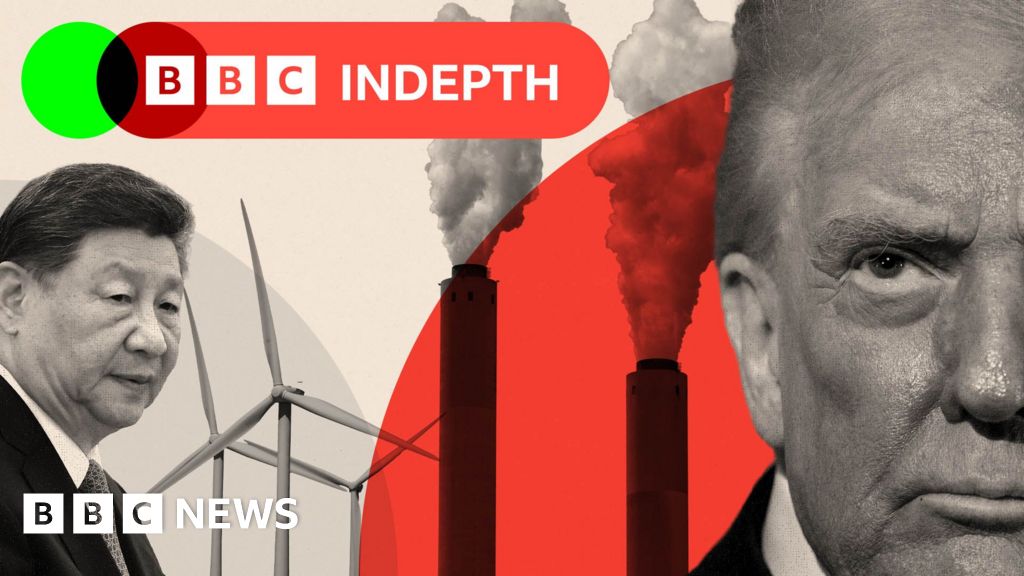
Part of the strain comes from geopolitics. The recent US administration adopted an explicitly pro-fossil-fuel stance — formally withdrawing from the Paris Agreement, rolling back environmental restrictions, opening federal lands to extraction, cutting clean-energy supports and promoting US hydrocarbons abroad. Those moves have had immediate international effects: talks to curb shipping emissions collapsed after opposition from the US and Saudi Arabia, and analysts warn that American retrenchment could embolden other countries to water down climate commitments.
At the same time, China has doubled down on clean technology as an economic strategy. Over recent years, renewables and related industries have been a major engine of Chinese growth: solar panels, batteries, electric vehicles and wind turbines are produced at scale and often at prices competitors struggle to match. That industrial leadership reframes climate policy as a contest over strategic economic advantage — a choice between fossil-fuel-first agendas and an industrial policy focused on clean tech.
Many countries now find themselves between those poles. Europe, wary of having ceded manufacturing advantages before, aims to reclaim significant market share in renewables as the sector expands. Emerging economies face tradeoffs between securing affordable energy now and investing in the low-carbon technologies that will dominate future markets.
These geopolitical and economic tensions shape assessments of COP’s relevance. Some see the summit’s core function as accountability: a public, annual forum where governments, businesses and institutions are held to their commitments and where collective pressure can nudge policy and investment. UN Secretary-General António Guterres has used the platform to issue stark warnings about the likelihood of breaching the Paris 1.5°C goal. COPs also remain a venue for consequential negotiations — on finance, adaptation and protection of critical ecosystems. This year’s talks, for example, sought funding mechanisms to safeguard vital forests like the Amazon and Congo Basin.
Others argue the format should evolve. Michael Liebreich and others propose fewer large global summits and more frequent, smaller meetings narrowly focused on implementation barriers, finance and technology deployment. The suggestion is that industry development and capital markets — not annual political pledges — will ultimately determine the pace of decarbonisation, so forums in financial centres and trade negotiations may matter more than yearly UN gatherings.
Still, voices in favour of preserving COP’s core functions say the multilateral process plays an outsized political role. Collective agreements and public reporting reassure markets that governments are committed to transition policies, which can unlock private investment. Advisers to past governments argue that dismantling the cooperative platform would make it easier for actors to undermine international cooperation and send confusing signals to businesses.
A pragmatic compromise has emerged in many quarters: scale down the spectacle while protecting the essentials. Keep the summit as a place for accountability, for negotiating international finance and support for vulnerable communities and ecosystems, and for high-level political signalling — but pair it with more targeted, bilateral and commercial arrangements that drive on-the-ground deployment of clean technologies.
Ultimately, the strategic choice facing countries may be less about the number of COP meetings and more about allegiance in a shifting global economy: will nations align with a China-led clean-energy industrial push, or double down on fossil fuels and the short-term gains those resources offer? As decarbonisation proceeds, it is likely to be shaped increasingly by industrial policy, bilateral deals and private-sector investment — even as the UN process remains one of the few forums where global accountability and shared finance mechanisms can still be agreed.
Whether that combination is enough to bend emissions downwards remains the central question. The COPs may no longer look like the high-drama family photos of 2015, but for many governments and organisations they still provide an indispensable, if imperfect, space to negotiate the economic and political trade-offs of the energy transition.