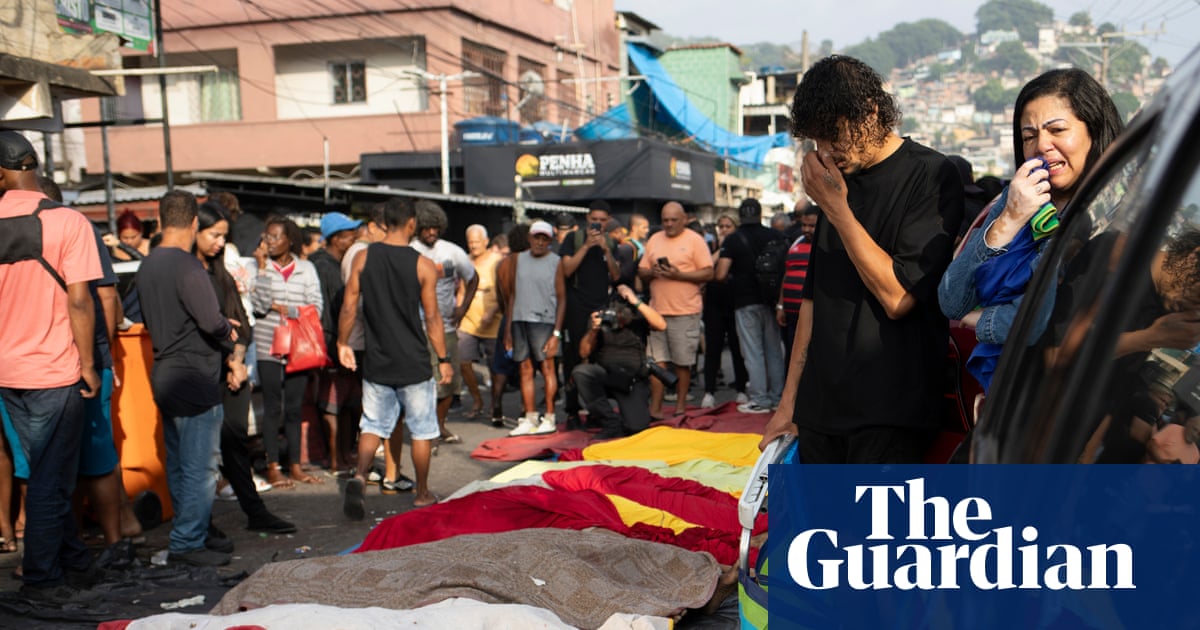

Before dawn over Vila Cruzeiro, dozens of bodies lay along the favela’s main street after an operation that left more than 130 people dead, according to the public prosecutor. Corpses, some bloodied and badly injured, were brought down from nearby hills and left on tarpaulins and plastic sheets as the neighbourhood came to terms with what residents described as a massacre.
Erivelton Vidal Correia, head of the local residents’ association, said he spent the night carrying victims from the slopes. “I’ve brought 53 down myself… there must be another 12 or 15 up there in the bush,” he told reporters, breaking down as he recounted the relentless work of recovering bodies after what many called one of the worst police killings in recent Brazilian history.
Local activists compared the scale of the bloodshed to war zones. “I’ve never seen anything like this,” said Raull Santiago, an activist at the square where more bodies continued to arrive. Pickup trucks delivered dozens of corpses between about 4.15am and 9am, filling a plaza named after Saint Luke the Evangelist and sending relatives and neighbours into frantic searches for missing sons, brothers and husbands.
Rio authorities said a force of about 2,500 police carried out the pre-dawn assault on Alemão and Penha, the complex of favelas that includes Vila Cruzeiro. Early official statements reported at least 64 dead, including four police officers; the public prosecutor later said the toll had risen to 132, surpassing the 1992 Carandiru prison deaths.
Most of those killed appeared to be young men in their late teens, 20s and 30s, and officials said the operation targeted the Red Command drug faction. Several of the bodies were unclothed, and some were wearing ghillie suits or camouflage used to blend into foliage, suggesting they had been in hiding on the hillsides.
Anger and grief were widespread at the scene. Relatives and neighbours accused police of summary killings rather than arrests. “Whether or not these people were involved in the drug trade, we do not have the death penalty in Brazil… They should have been detained,” Santiago said.
Cida Santana, whose son Fabio sent a message saying he had been shot in the foot and was trying to surrender, collapsed beside his body when it arrived. Many of the dead showed signs of violent injury; relatives and onlookers ripped back coverings so journalists could see and record the scene to show the wider world.
Community leaders, lawyers and religious figures described the assault as unprecedented. “This was a slaughter, not an operation. They came here to kill,” said Santana. Flávia Pinheiro Fróes, a lawyer supporting families of the dead, called it “the greatest act of savagery” she had seen in three decades of working in the favelas.
Rio’s governor, Cláudio Castro, defended the raid as a necessary blow against heavily armed traffickers, calling the targets “narco-terrorists” and saying the only victims had been police officers killed in clashes. His remarks drew swift criticism from domestic and international rights groups; the UN human rights office said it was horrified by the killings and urged an investigation.
While authorities described a large, coordinated assault, community members and activists demanded accountability and answers. A priest, Edmar Augusto, sprinkled holy water over the bodies as mourners gathered, pleading for peace and lamenting the scale of the loss. Residents urged wider attention to the human cost of policing strategies in Rio’s poorest areas and called for independent probes into whether rules of engagement were followed.
As the day wore on, the favela remained shaken. For some, the raid confirmed long-standing fears about cycles of violence; for others it reinforced calls for political change and the removal of leaders seen as endorsing harsh security tactics. Community organisers, family members and human rights advocates said they would press for investigations and for those responsible to be held to account.