
Hurricane Melissa swept through the Caribbean, striking Cuba after leaving large swaths of Jamaica battered by fierce winds and torrential rain.
The storm’s impact was felt regionwide. In Haiti, flooding from swollen rivers swept through communities, and local authorities reported 25 people killed when floodwaters carried away homes and residents.
Melissa became the most intense tropical cyclone to hit Jamaica in nearly two centuries and is among the strongest Atlantic hurricanes recorded. Climate scientists have warned that human-caused warming of the oceans is making storms like Melissa intensify more rapidly than in the past.
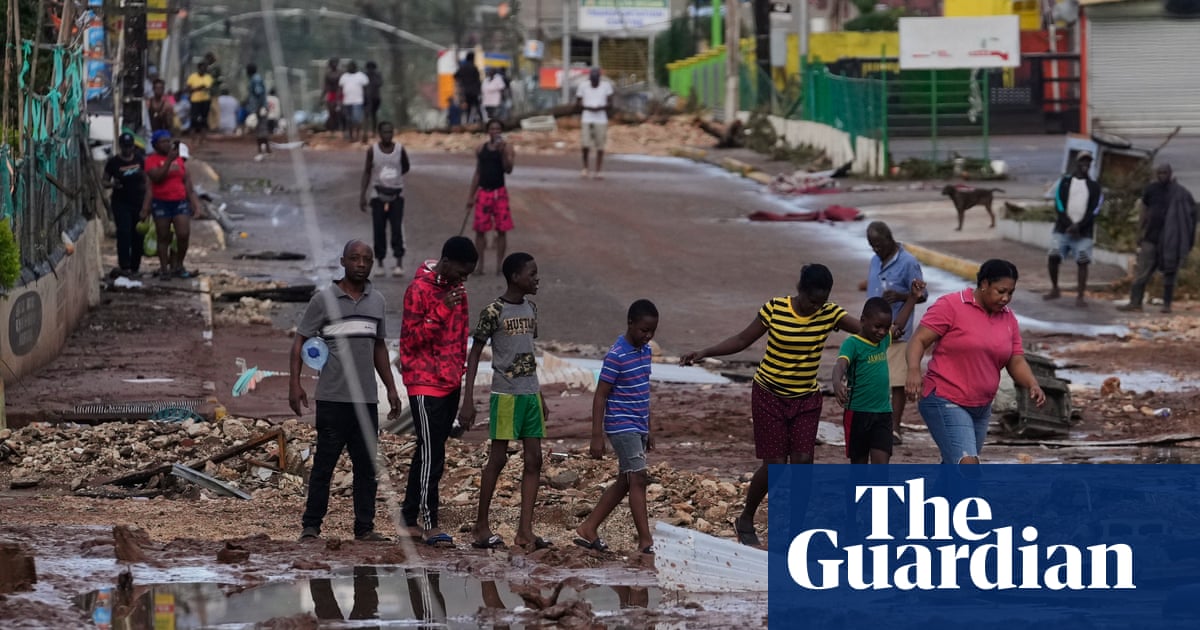
Jamaica woke to extensive destruction. Prime Minister Andrew Holness declared the nation a disaster area, a move that allows emergency powers including mandatory evacuations in flooded zones and measures to prevent price gouging. Thousands were left without power and entire neighbourhoods were submerged.
The hurricane tracked slowly across the island, bringing catastrophic damage, especially in western parishes. Roofing was torn from houses, vehicles were overturned, trees were uprooted and roads were buried by gravel and silt. Officials said whole communities were cut off and vital infrastructure had been severely damaged.
Desmond McKenzie, Jamaica’s minister of local government, described Melissa as one of the worst storms the country has experienced. At the height of the crisis, about 15,000 people were sheltering in emergency centres and more than 530,000 customers were without electricity in a country of roughly 2.8 million people.
In Mandeville, the largest town in Manchester parish, residents counted damage to homes and public buildings. Streets were littered with fallen trees, downed power lines and debris. Local residents who have experienced previous major storms said they endured this one with a mix of resignation and concern, noting that roofs and school buildings had been badly damaged.
Janet Lewis, a shop owner in Clarendon parish near hard-hit St Elizabeth, said the roof of her shop and adjoining house were torn away. She appealed for help, saying her business had been devastated. “It was terrible, the constant strong wind and rain just took the roof off,” she said.
Early assessments by international and local agencies suggested the island faced unprecedented devastation. Dennis Zulu, the UN resident coordinator in Jamaica, spoke of “tremendous, unprecedented devastation” in preliminary assessments. Alexander Pendry, global response manager at the British Red Cross, said early indications pointed to an “unprecedented catastrophe” and that the priority was delivering urgent aid to affected communities.
Jamaica’s transport minister, Daryl Vaz, said authorities were working to reopen airports and clear airfields so relief flights could arrive as soon as it was safe, aiming for relief flights to land quickly at Norman Manley International Airport in Kingston.
Across Jamaica authorities reported four deaths. The Dominican Republic reported one fatality and one person missing.
In Haiti, the coastal town of Petit-Goâve was overwhelmed when the La Digue River overflowed, collapsing dozens of homes and sweeping away people caught in the flood. The mayor of Petit-Goâve described scenes of destruction and pleaded for rescue assistance as people remained trapped under rubble or in flooded houses. Photos from Haitian towns showed people sheltering in schools and other public buildings.
When Melissa made landfall in Jamaica it was classified as a category 5 hurricane on the Saffir-Simpson scale; the US National Hurricane Center reported sustained winds as high as 185 mph (298 km/h) at one point. The storm later lost some intensity but remained powerful as it moved toward Cuba, briefly downgrading to category 3 and then category 2 as it crossed the island chain.
Cuban authorities reported extensive damage after Melissa made landfall on the island’s southern coast. President Miguel Díaz-Canel said the storm caused significant destruction and urged citizens to remain sheltered and disciplined as the system continued to move across Cuban territory. Officials ordered large-scale evacuations, with more than 735,000 people moved from vulnerable areas, especially around Santiago de Cuba. Buildings, including hotels, suffered broken windows and damaged roofs.
Meteorologists warned Melissa would continue to be dangerous even after weakening, with the capacity to cut power and inflict serious structural damage as it tracked toward the Bahamas.
Regional leaders and experts pointed to climate change as a factor in the storm’s rapid intensification. Meteorological analyses showed winds accelerating dramatically in a short timeframe, a pattern scientists link to warmer ocean temperatures. Caribbean governments have renewed calls for wealthier, high-emitting nations to provide increased aid, debt relief and financial support to help vulnerable island states recover and adapt to more frequent extreme weather.
Humanitarian agencies and local authorities said immediate priorities are search and rescue, restoring communications and power where possible, clearing roads, and providing food, water and medical care to displaced people. Recovery is expected to be lengthy and costly, with officials warning of long-term impacts on homes, businesses and critical infrastructure.
The report includes contributions from The Associated Press and Agence France-Presse.