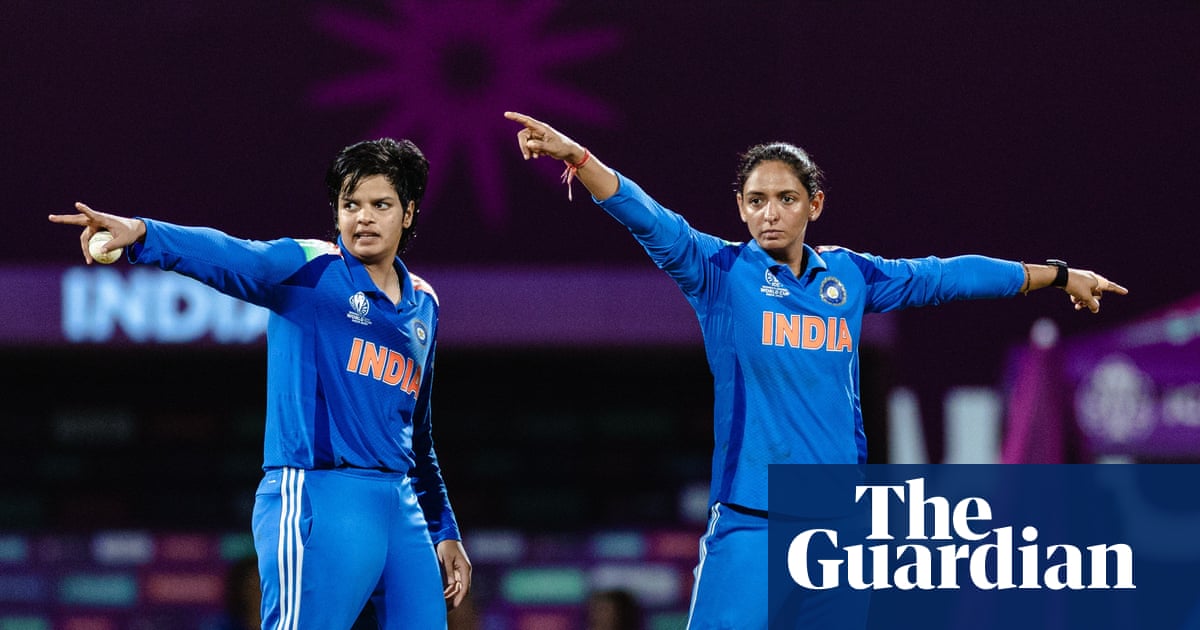

Shafali Verma grew up in Rohtak, Haryana, where girls playing cricket was frowned upon. Determined to play, she cut her hair at nine, entered a tournament posing as her brother and won man of the match. When academies refused to accept a girl, her father Sanjeev enrolled her as a boy. “Luckily, nobody noticed,” he later said, as Verma went on to make her India debut at 15.
On Sunday Verma and her teammates lifted the Women’s Cricket World Cup — the first time an Indian women’s side has claimed the trophy. The win was more than a sporting milestone: it became a potent symbol of social change after years of stigma, scarce resources and the struggle many players face balancing work with training.
Cricket in India occupies an outsized cultural space, yet women’s professional structures are young. Central contracts for women arrived only in 2017 and the Women’s Premier League began in 2023. Resistance at home and in local communities remains common: Uttar Pradesh under-23 player Varnika Choudhary spent two years persuading her parents to allow her to play. Where men’s tournaments drew village crowds for years, women’s cricket was often ignored — until this victory.
When India won, Choudhary said her whole village watched the final in the square and celebrated. People compared Verma’s power to men’s hitting; Choudhary pushed back: “No, she’s hitting like a woman.”
Hundreds of millions watched the final. For many viewers the triumph signalled broader change in a patriarchal society where women’s behaviour and appearance are tightly policed and gender pay gaps persist. “More women playing cricket changes everything, not just in the sport,” Choudhary said. “We feel independent, we feel we are doing something for ourselves and that society can finally see us equal to the men.”
Cricket writer Sharda Ugra observed the cultural resonance: seeing women from small towns compete visibly and loudly — running, sweating, shouting — challenged norms about honour and shame tied to women in public life. The team, led by Harmanpreet Kaur, were celebrated nationally and hosted at the prime minister’s residence. Kaur paid tribute to earlier generations of players and warned that without tangible change the “revolution” they want may not arrive.
Ugra also cautioned that women’s cricket still trails the men’s game in scale. The WPL has only five teams; training centres and academies for girls, particularly in rural areas, remain limited; and women’s cricket is administered within the same body as men’s rather than under a separate organisation.
The effects are already visible at grassroots level. At a Delhi academy affiliated with Gargi College, 11-year-old Kiera Kareer said the final showed women’s cricket is on par with men’s and inspired her to aim for the national team. Spreeha Maurya, who was once the only girl at her academy, recalled coaches letting her train free to encourage participation; after the win she saw packed stands and louder support for women players.
Trials at state level have surged — where about 40 girls used to show up, this year around 500 attended in one example. Parents who once hesitated are bringing daughters as young as six to nets, hopeful their children might follow in the new champions’ footsteps.
The World Cup victory has provided visibility, momentum and proof that investment matters. The next task is to translate inspiration into infrastructure: more teams, better coaching, broader access and sustained funding so this breakthrough leads to lasting opportunity for future generations.
Additional reporting by Aakash Hassan