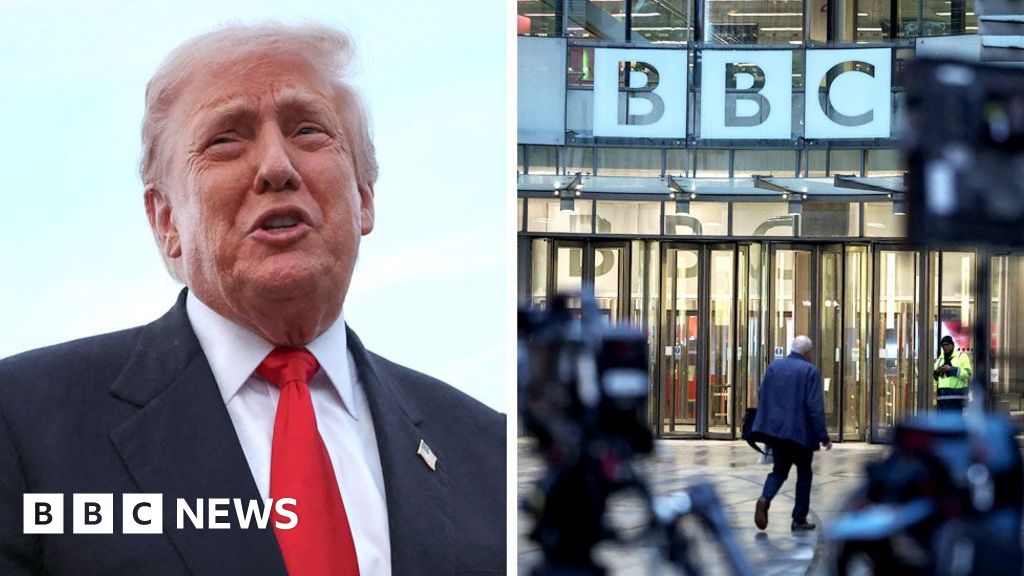

Donald Trump has threatened legal action against the BBC after a leaked internal memo accused Panorama of misleading viewers by splicing parts of his 6 January 2021 speech. His legal team has given the corporation until 14 November to issue a “full and fair retraction” or face a $1bn (£760m) lawsuit.
The memo, circulated by Michael Prescott, a former independent external adviser to the BBC’s editorial standards committee, said Panorama combined two moments from the speech that were originally more than 50 minutes apart. Shown separately, one line reads: “We’re going to walk down to the Capitol, and we’re going to cheer on our brave senators and congressmen and women.” The programme presented a stitched version that created the impression he said: “We’re going to walk down to the Capitol… and I’ll be there with you. And we fight. We fight like hell,” which critics say implied a direct call to action.
Prescott’s memo also raised wider concerns about BBC coverage, including allegations of anti-Trump and anti-Israel bias, problems in BBC Arabic’s reporting on the Israel–Gaza war, and one-sided treatment of transgender issues. Publication of the memo intensified scrutiny of the corporation and preceded the resignations of director general Tim Davie and outgoing news CEO Deborah Turness.
Samir Shah, chair of the BBC Board, accepted an “error of judgement” over the Panorama edit and said the corporation wished to apologise for the impression the edit gave of a direct call to action. In a letter to the Culture, Media and Sport Committee, he said the BBC had received more than 500 complaints since the memo became public.
Shah wrote that the Panorama clip had been considered by the BBC’s Editorial Guidelines and Standards Committee in January and May as part of a wider review of US election coverage, and that Prescott and some committee members had raised concerns at the time. He said BBC News had defended the edit as an attempt to convey how the speech was received by Trump supporters and to show what was happening on the ground. Shah acknowledged, however, that with hindsight the issue should have prompted more formal action.
Trump’s letter, received by the BBC on Sunday, demands an apology and “appropriate compensation,” and accuses the broadcaster of making “false, defamatory, disparaging, misleading, and inflammatory statements.” His lawyer, Alejandro Brito, also alleged defamation under Florida law.
Davie said the current debate around the BBC was not the sole reason for his decision to step down but had “understandably contributed” to it, adding he must take ultimate responsibility for mistakes. Turness defended the journalism at the corporation, saying the BBC was “not institutionally biased” and praising staff for striving for impartiality.
Political responses were mixed. A No 10 spokesman said the prime minister did not believe the BBC was institutionally biased and denied the broadcaster was “corrupt,” a term Trump has used about some BBC journalists. Conservative politician Kemi Badenoch said the Panorama incident raised serious questions. Liberal Democrat leader Sir Ed Davey accused Trump of trying to “destroy the BBC and take our money,” while Reform UK leader Nigel Farage said he had spoken to Trump and quoted him: “Is this how you treat your best ally?”
Shah noted the editorial standards committee had discussed Prescott’s other complaints and that a review of the BBC’s coverage of sex and gender identity found much of it met standards of impartiality and accuracy, though he conceded the corporation sometimes gets things wrong and takes corrective and disciplinary action when necessary.
The US president has a recent record of suing or threatening media organisations. In July, CBS News and parent company Paramount settled a legal claim by Trump for $16m (£13.5m) over alleged deceptive editing of an interview. The New York Times, CNN and the Des Moines Register have also faced legal challenges from him.