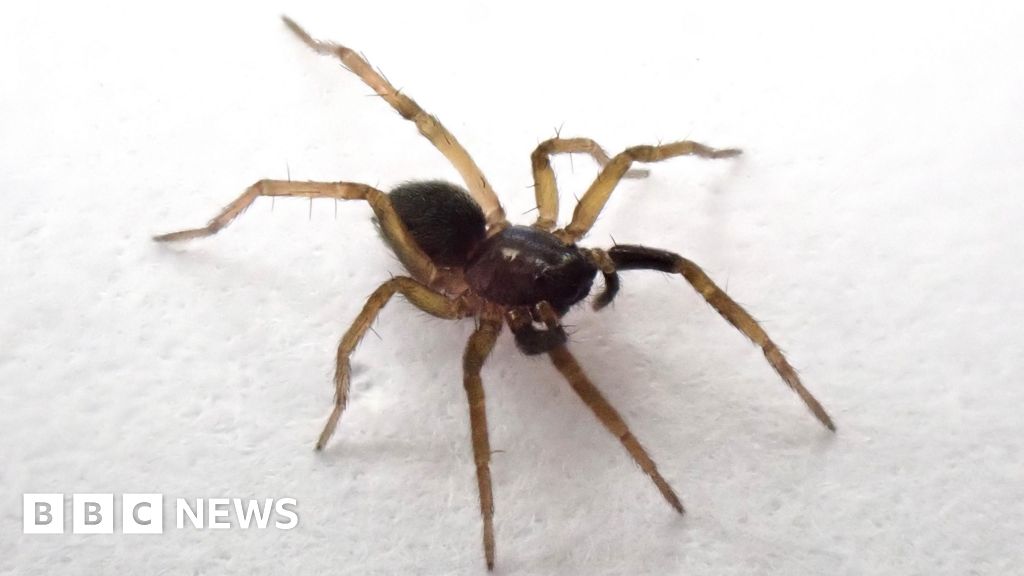

A critically endangered spider long missing from the UK has been rediscovered on the Isle of Wight. Aulonia albimana, last recorded in Britain in 1985, was found within the National Trust’s Newtown National Nature Reserve.
The tiny arachnid, notable for its dark brown body and orange, hairy legs, was located in a remote, overgrown section of the reserve that is only reachable by boat, about 2 km from where the species was previously known to occur. The field team have informally dubbed it the ‘white-knuckled wolf spider’ in reference to pale, knuckle-like markings on the small appendages beside its mouth.
Entomologist Mark Teller, who discovered the spider alongside colleague Graeme Lyons, said the find felt like an unforgettable moment and highlighted the role of targeted habitat management, curiosity and collaboration in producing such results. The National Trust described the discovery as a major conservation success.
Lyons recalled the search as a long shot: the pair had just four hours on the site where the spider was last seen four decades ago before their boat collected them. He says he found the first specimen with nine minutes to spare and a second in the final minute. Lyons, who has recorded more than 550 spider species in the British Isles, called this the most exciting of his finds.
Dr Helen Smith, conservation officer for the British Arachnological Society, called the rediscovery one of the century’s great ‘lost species’ recoveries for Britain. She noted that repeated failures to locate the species at its former open-habitat sites, many of which had become overgrown, had led experts to fear it might be extinct in the UK.
Wolf spiders are ground hunters known for chasing and pouncing on prey rather than building webs. About 38 wolf spider species are found in the UK. The Newtown discovery offers hope for Aulonia albimana’s survival in Britain and underscores the importance of maintaining and managing suitable habitats for rare invertebrates.