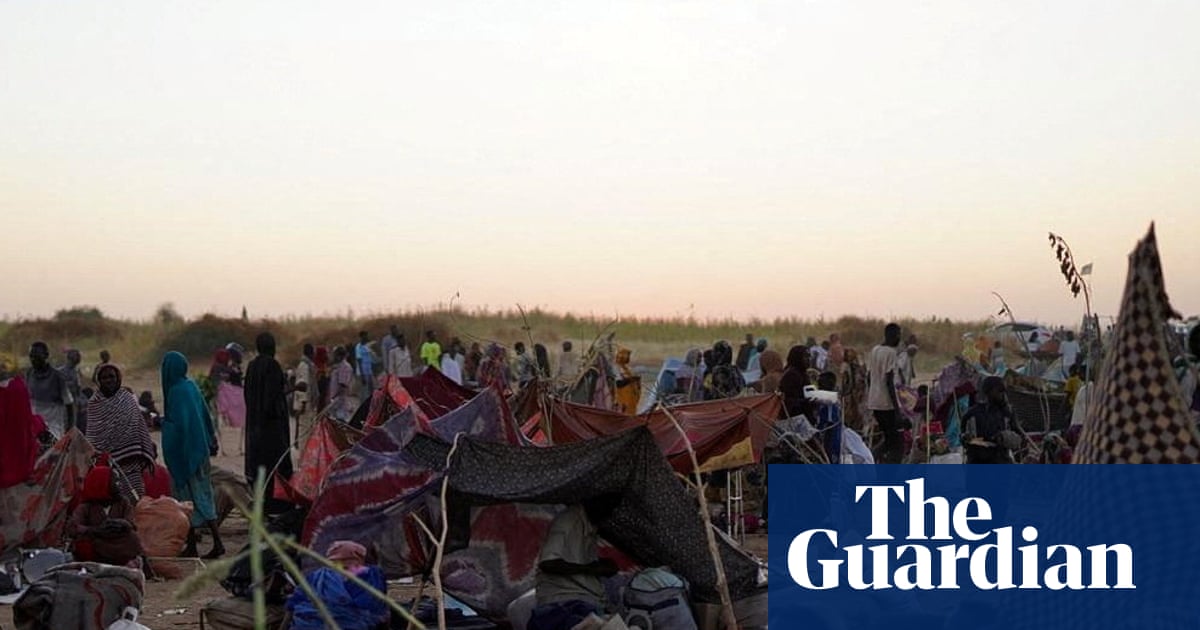

Reports of ethnically motivated mass killings and other atrocities have emerged from El Fasher after the paramilitary Rapid Support Forces (RSF) took control of the city in Sudan’s Darfur region over the weekend.
Local activists released video showing an RSF fighter shooting a group of unarmed civilians at point‑blank range. Other footage shared by pro‑democracy activists purportedly shows dozens of bodies beside burnt vehicles; those clips have not been independently verified.
The Joint Forces, allied with Sudan’s army, said on Tuesday the RSF had executed more than 2,000 unarmed civilians in recent days. The Yale Humanitarian Research Lab, which monitors the conflict using open‑source intelligence and satellite imagery, said it found evidence consistent with mass killings and described what it assessed as a systematic, intentional process of ethnic cleansing targeting Fur, Zaghawa and Berti Indigenous non‑Arab communities. The lab reported signs of forced displacement, summary executions and what appeared to be door‑to‑door clearance operations.
Nathaniel Raymond, executive director of the Yale Lab, said satellite imagery showed bodies and red‑coloured discoloration on the ground and compared the level of violence to the first 24 hours of the Rwandan genocide, warning that the country was at the beginning of a new wave of mass violence.
The RSF said it had seized the army’s main base in El Fasher and announced it had “extended control over the city.” Sudan’s army chief, Gen Abdel Fattah al‑Burhan, acknowledged his forces had withdrawn from El Fasher “to a safer location,” effectively conceding the loss of the city.
The RSF has been fighting the army since April 2023 after a power struggle that has spiralled into a wider civil war. Humanitarian agencies and relief organisations say the conflict has already killed more than 150,000 people and displaced over 14 million. Tens of thousands of civilians in El Fasher had been living under an 18‑month RSF siege; the UN says more than 1 million people have fled El Fasher since the start of the war and about 260,000 remain trapped there without aid, roughly half of them children.
On Monday the UN rights chief, Volker Türk, warned of a growing risk of “ethnically motivated violations and atrocities” in El Fasher. The UN Human Rights Office said it was receiving multiple alarming reports of summary executions of civilians trying to flee, and videos showing unarmed men shot or lying dead while RSF fighters accused them of being army combatants. News organisations said they were unable to contact civilians in the city because communications, including satellite networks, appeared to have been cut.
The UN migration agency reported that more than 26,000 people fled fighting around El Fasher since Sunday, moving either to the city outskirts or toward Tawila, about 45 miles west. Médecins Sans Frontières (MSF) teams in Tawila said they were treating a large influx of wounded from El Fasher: since Sunday evening 130 people had been hospitalised, including 15 in critical condition.
Aid agencies warned that towns already hosting large numbers of displaced people are at breaking point. Arjan Hehenkamp of the International Rescue Committee said without a significant scale‑up in humanitarian assistance the situation would worsen. Emi Mahmoud of the Darfur Internally Displaced People Network described footage she has seen of mass graves and bodies and said the crisis resembled the “final stage of the Darfur genocide.” There are fears of a repeat of the mass killings that followed the RSF capture of Geneina in 2023, where thousands—mostly from non‑Arab groups—were killed.
The RSF’s capture of El Fasher, previously the last major Darfur city held by the army, gives the paramilitary control of all five Darfur state capitals and marks a major shift in the conflict. Analysts say the army is now excluded from roughly a third of Sudanese territory, raising concerns the country could be weakened or partitioned by the ongoing fighting.
Agence France‑Presse contributed to this report.