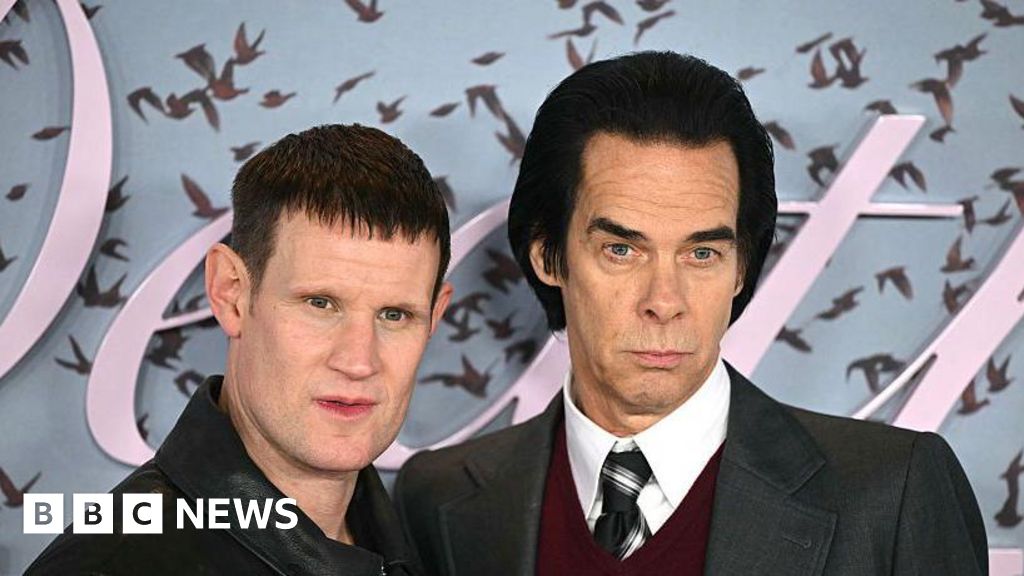

When Matt Smith first stepped into the role of Bunny Munro, Nick Cave was struck by how different the on‑screen presence felt from the book. In Cave’s novel Bunny is a failed lothario, often treated as a joke by women. Smith’s version, however, carries an undeniable attractiveness that alters how scenes land: when his Bunny flirts, women respond, and that reaction shifts the character’s tone on screen, adding layers of ambiguity and danger.
The Death of Bunny Munro has been reshaped as a television series, with Smith — known for Doctor Who and The Crown — playing a man unravelling after his wife’s suicide. Bunny takes his son and embarks on a chaotic road trip, clinging to work, lust and denial as his life falls apart. Smith says he accepted the part soon after meeting Cave, drawn to the challenge of portraying a father driven to the edge by grief and desire.
Cave, now 68, returned to one of his morally complicated creations and insists Bunny is not simply a villain. He describes him as a flawed human being wrestling with loss, legacy and ordinary human failures. Smith’s portrayal leans both beguiling and perilous; that charisma makes Bunny’s downfall harder to write off as mere depravity. Smith characterises him as selfish and difficult but also funny, volatile and oddly charismatic, and says he found himself unexpectedly attached to the role.
This tension — repellent and relatable at once — supplies much of the story’s emotional force. Both actor and writer emphasize that beneath the surface chaos the series is deeply, and unexpectedly, a story about a father and son. Smith calls it a portrait of inherited behaviour and of a boy trying to break destructive patterns. Cave frames the tale as an exploration of inheritance more broadly: what we take from our parents and what we choose to leave behind. Little Bunny needs distance from his father to find safety, but Bunny Sr.’s essential, if limited, humanity complicates any desire to cut him out completely.
Set in 2003 Brighton, the adaptation sits close enough to our time to feel familiar while allowing for a period‑specific backdrop that shows how attitudes toward men like Bunny have shifted. Neither Cave nor Smith claims the show is a manifesto on masculinity; they prefer to speak of it as a human story about choices, flaws and the small mercies that bind people together.
Cave’s work has long mined personal feeling and domestic tragedy. His life has been marked by profound loss: his son Arthur died in 2015 after a fall in Brighton, and his eldest son Jethro died in 2022 at age 30. Cave has written about the immensity of that grief and how it altered him, noting that sadness travels with you even when you move from one place to another. Though Bunny Munro is not autobiographical, Cave says he recognised the character’s inner impulse from his own youth in music and from a sense of being both drawn to and awkward around fame, sex and the attention of women. He describes himself as more shy than predatory in relationships, yet maintains that even his most unsavoury characters are facets of a more complicated self.
The Death of Bunny Munro arrives on Sky Atlantic from 20 November.