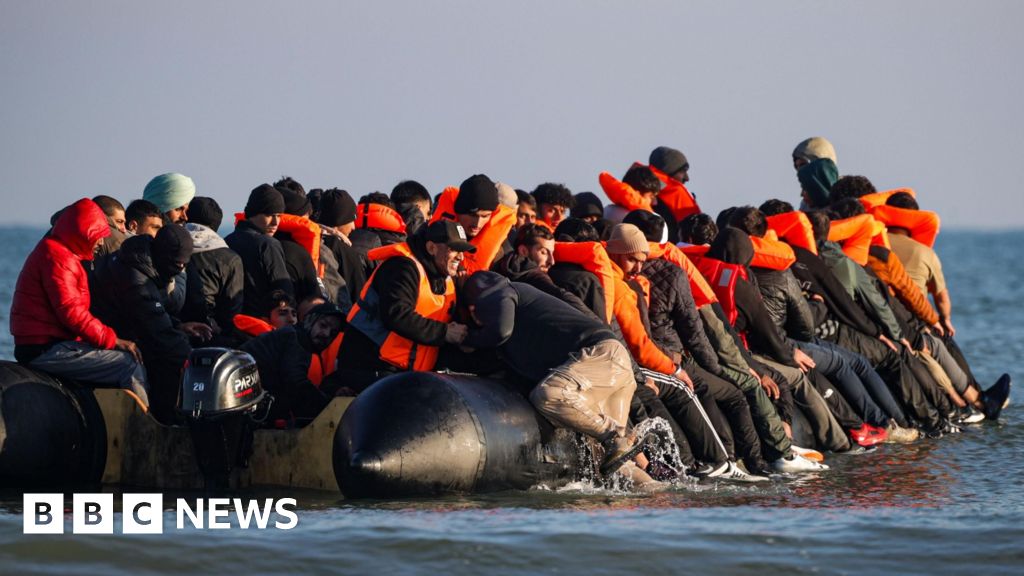

A second migrant who had been sent from the UK to France under the government’s “one in, one out” pilot has re-entered the UK and been detained, the Home Office confirmed. He was identified by biometric checks on arrival and will be returned to France “as quickly as possible,” a spokesperson said.
The UK-France pilot, agreed in September, aims to deter Channel crossings by returning one person to France for each person removed. The scheme’s first flight carrying a cross-Channel small‑boat migrant — an Indian national — landed in Paris on 18 September. Around 100 men detained after arriving in the UK on small boats have been held in immigration removal centres near Heathrow and told they may be returned to France.
Last month an Iranian man who had been sent to France managed to re-enter the UK by small boat one month after his removal; he was deported again last Wednesday. The latest case is the second known re-entry under the pilot.
A Home Office spokesperson said officials would continue to detect and return anyone trying to re-enter the UK: “Anyone looking to return to the UK after being removed under the UK‑France agreement is wasting their time and money. This individual was detected by biometrics and detained immediately. His case will be expedited, and he will be returned to France as quickly as possible. The message is clear: if you try to return to the UK you will be sent back. We will do whatever it takes to scale up removals of illegal migrants and secure our borders.”
Downing Street described the detection of a second returnee as evidence the system is working. The prime minister’s official spokesman said the person was identified on arrival, detained, and now faces prompt removal back to France — their attempt and money spent on the crossing described as “wasted.”
Official figures released by the Home Office so far show 94 migrants have been returned to France and 57 people have arrived in the UK under the scheme. Despite removals, crossings remain high: more than 500 people crossed the Channel by small boat on one recent day, 349 on the next, and 39,075 people have made the journey so far this year.
The situation has revived debate about broader immigration reforms. Home Secretary Shabana Mahmood is reported to be considering a major overhaul of UK immigration rules modelled on Denmark’s system. Speaking at the Labour conference in September, Mahmood pledged to “do whatever it takes” to regain control of Britain’s borders; proposals under consideration reportedly include tightening family reunion rules and making it easier to remove people with no right to stay.
Opposition and other parties criticised the government’s handling of the pilot and border controls. Liberal Democrat home affairs spokesman Max Wilkinson accused the Home Office of “staggering levels of incompetence,” arguing the re-entries show the system is broken. He called for asylum seekers to be moved out of hotels and for “large-scale returns agreements” with all safe countries.
Shadow home secretary Chris Philp said nearly 18,000 migrants had arrived in the UK since the agreement was struck, but only a small number had been removed, which he said was why arrivals continue. Philp urged tougher measures, including proposals his party has advocated such as leaving the European Convention on Human Rights and removing illegal entrants within a week, and criticised Labour and Reform for lacking comparable plans.
As the pilot continues, ministers say biometric checks and expedited procedures will be used to detect and return people who re-enter after removal, while opponents argue the approach is patchy and insufficient to stem the high levels of crossings.