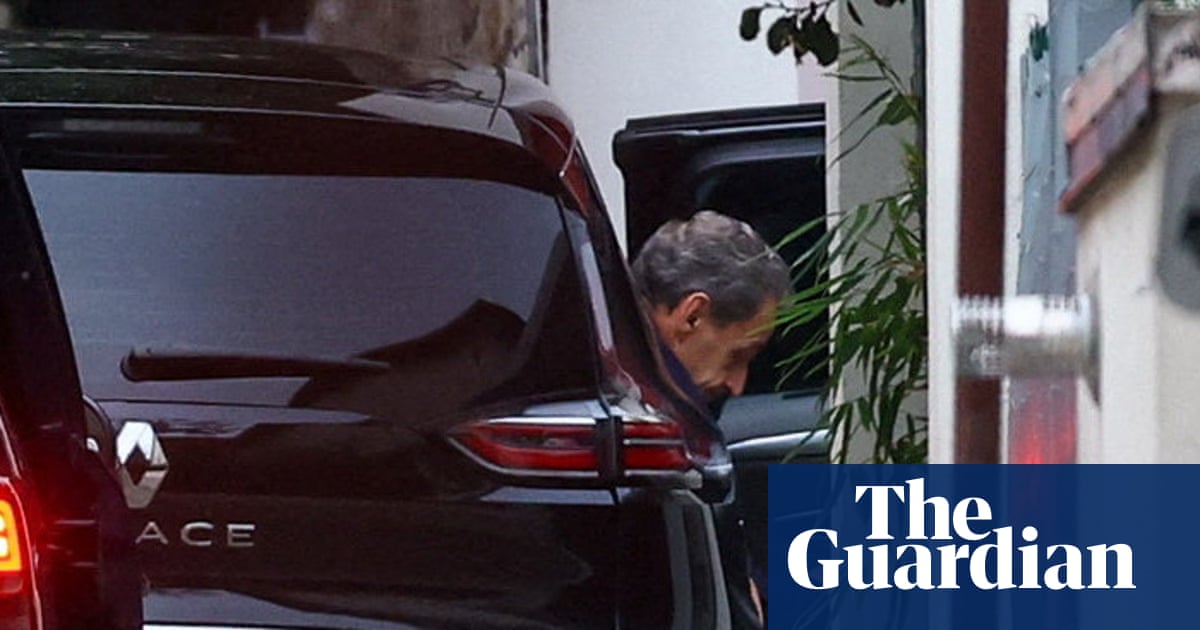

Nicolas Sarkozy said he will “prove his innocence” after being released from La Santé prison while he pursues an appeal of a criminal conspiracy conviction tied to alleged Libyan campaign funding. The former president left prison on Monday after 20 days behind bars, accompanied by his wife Carla Bruni-Sarkozy.
Posting on social media, the 70-year-old wrote that the law had been applied and that he would prepare his appeal, adding that his energy is focused on demonstrating his innocence and that the truth will prevail.
Sarkozy began serving a five-year sentence on 21 October, after a Paris court found him guilty of criminal conspiracy connected to efforts to secure funding for his 2007 presidential campaign from Muammar Gaddafi’s regime. He denies any wrongdoing and has appealed; a retrial on appeal is scheduled for next spring. Judges had previously ordered him to serve the sentence while the appeals process continued, citing the “exceptional gravity” of the conviction.
A Paris appeals court granted his request for release on Monday under specific conditions. He is barred from contacting officials at the justice ministry, including justice minister Gérald Darmanin, who visited him in prison last month — a visit that drew criticism from some magistrates who said it could undermine judicial independence. Sarkozy is also prohibited from speaking with other people involved in the case and is banned from leaving France.
Speaking to the court by video link from prison, wearing a navy suit and seated with his lawyers, Sarkozy praised prison staff as “exceptionally humane” and described his detention as a “gruelling” ordeal. He insisted he never intended to ask Gaddafi for financing and said he would never confess to something he did not do. He added that being imprisoned at 70 had been an imposed ordeal that left a mark.
He had been held largely in solitary confinement for security reasons in an individual cell of about nine square metres with his own shower and toilet; two bodyguards were accommodated in a neighbouring cell. Reports said he largely ate yoghurts in prison, wary of potential food tampering, and declined to use cooking facilities.
Sarkozy’s lawyer, Christophe Ingrain, who visited daily, argued the former president would be safer outside prison, noting Sarkozy had faced death threats, heard screams at night and seen urgent interventions when other inmates self-harmed.
Sarkozy, who served as France’s president from 2007 to 2012, became the first former EU head of state and the first postwar French leader to serve time in prison. Bruno Retailleau, head of his party Les Républicains, said the release was expected and praised Sarkozy’s courage and determination.
Last week Sarkozy’s social media account posted a video showing letters, postcards and packages he had received in prison, some containing collages, a chocolate bar or a book, with a message that no letter would go unanswered and that the story was not yet finished.
At his trial, the public prosecutor accused Sarkozy of entering into what he called a “Faustian pact” with one of the most brutal dictators of recent decades to obtain Libyan funding. Sarkozy denied participating in any criminal conspiracy to seek Libyan election financing.
He was acquitted at trial of three separate counts — corruption, misuse of Libyan public funds and illegal campaign financing — but the state prosecutor appealed those acquittals, meaning he will be retried on all counts next year.
These Libya-related allegations are the most high-profile of several legal challenges for Sarkozy. He has previously been convicted in two other cases and was stripped of the Légion d’honneur. In an earlier conviction for corruption and influence-peddling over attempts to obtain favours from a judge, he was given a one-year jail term that he served under electronic monitoring; he wore an ankle monitor for three months before being granted conditional release.