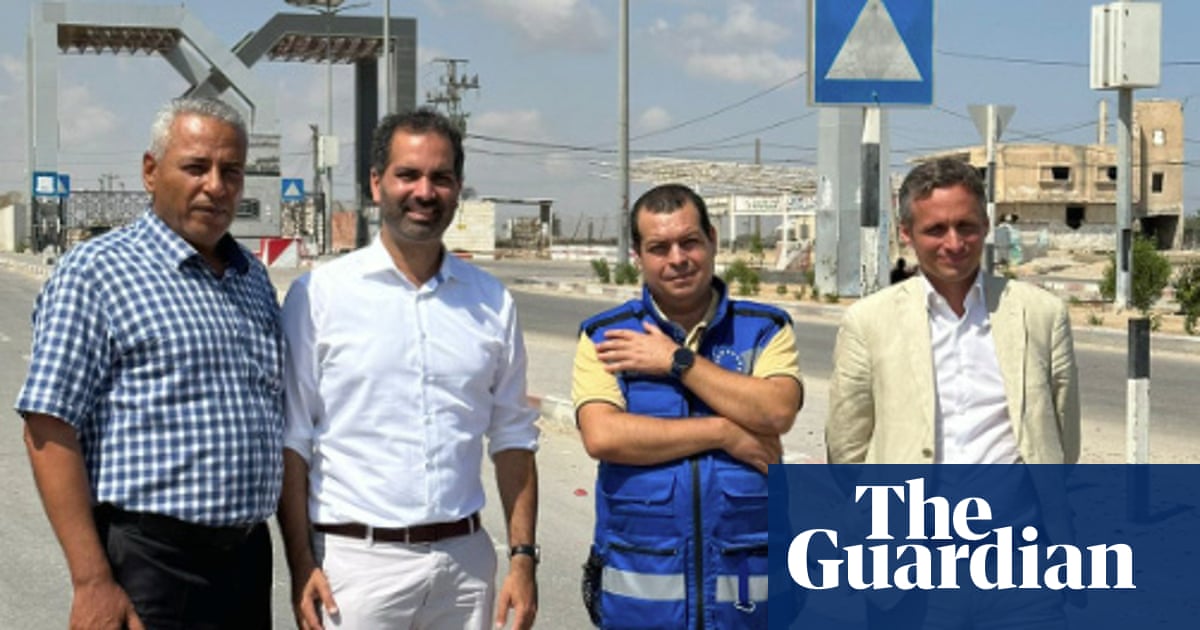

Mohammad Baraka, a Palestinian who served with the EU Border Assistance Mission (EUBam) at Rafah since 2006 as an unarmed civilian third‑party presence, has brought a case against the European Union in a Brussels court after being dismissed this year.
Baraka says he was evacuated to Cairo with EU assistance after the outbreak of war and continued working there, as did some colleagues who were based in the West Bank. When the EU decided to close the Rafah office because of the security situation, Baraka was dismissed. His lawyer, Selma Benkhelifa, says Baraka does not contest the decision to shut the office for safety reasons, but argues that other staff who worked at Rafah were not fired and were instead transferred elsewhere. Benkhelifa contends that treating Baraka differently amounts to discrimination based on his nationality.
The complaint centers on the nature of Baraka’s employment. He was officially employed under Belgian law on successive one‑year fixed‑term contracts. The court filing alleges this practice breaches Belgian rules that require conversion to permanent employment after three consecutive fixed‑term contracts. The claim states that a provision permitting repeated renewal of fixed‑term contracts conflicts with Belgian and European public policy and accuses a European institution of circumventing worker‑protection rules. It asks the tribunal to reclassify Baraka’s contract as a permanent one, with the associated rights.
The European Commission said it had no comment on the pending litigation.
Baraka said he pursued the case because of the “injustice” he experienced. He recalled accepting the EU evacuation as a long‑serving employee faced with a frightening and uncertain situation, but said he was not informed that evacuation would lead to dismissal or to the loss of residence and basic rights. He told the court that had he known the consequences, he would not have agreed to the move.