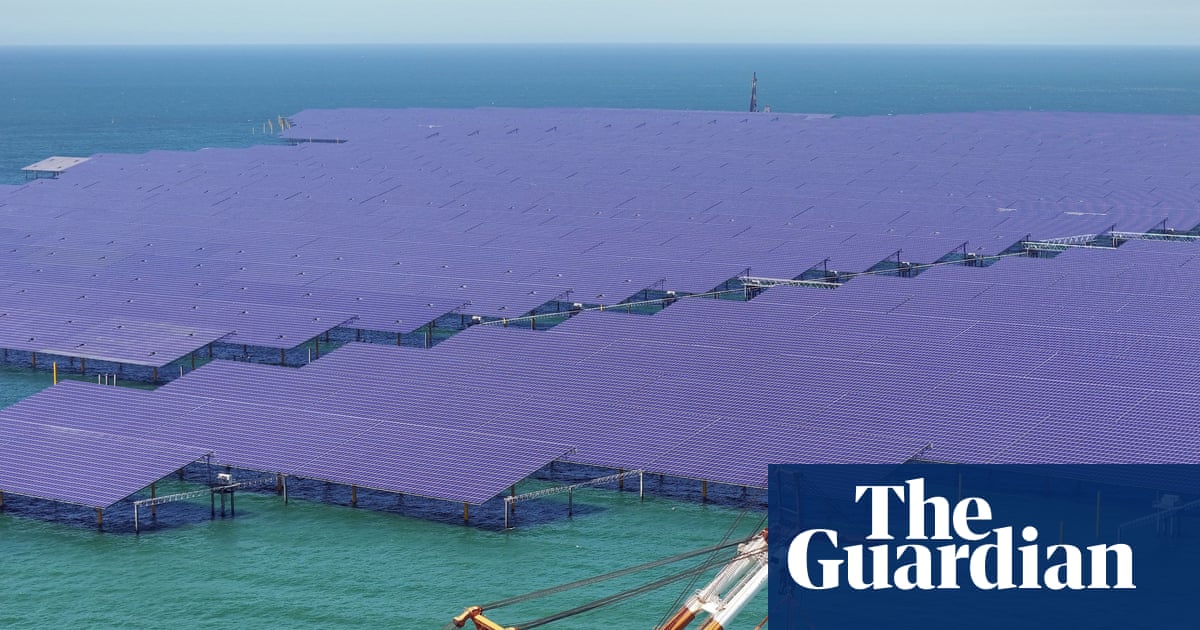

An analysis indicates China’s carbon dioxide emissions have been flat or falling for the past 18 months, suggesting the world’s largest emitter may have passed its peak emissions sooner than expected. Rapid expansion of solar and wind power has been a key driver: in the third quarter solar generation rose about 46% and wind generation climbed roughly 11% year‑on‑year. In the first nine months of the year China added around 240 GW of solar and 61 GW of wind capacity, putting it on track for another record renewables year in 2025. In 2024 China installed 333 GW of solar — more than the rest of the world combined.
The Centre for Research on Energy and Clean Air (Crea), in analysis for Carbon Brief, found that CO2 emissions in China were essentially unchanged year‑on‑year in the third quarter of 2025, helped by declines in travel as well as lower cement and steel emissions. Crea’s lead analyst noted that overall 2025 emissions could still show a small rise depending on fourth‑quarter activity, but if the year follows past patterns — with electricity demand and emissions peaking in summer — 2025 may record a net decline.
The findings arrive as world leaders meet in Brazil for COP30 amid growing urgency over global warming. China’s president did not attend the leaders’ summit, though the country’s delegation is participating. The U.S. president also did not attend and did not send a negotiation team. UN officials have warned of the consequences of failing to limit warming to 1.5°C.
Brazil’s COP30 president praised China’s advances in green technology and noted that solar panels are now cost‑competitive with fossil fuels in many settings. Still, China’s official climate timetable remains: peak emissions by 2030 and carbon neutrality by 2060. In September Beijing introduced interim targets to cut overall greenhouse gas emissions by 7–10% from their peak by 2035; experts say those targets are modest compared with the roughly 30% reductions they judge feasible and necessary. Analysts and policymakers have urged treating the new targets as a baseline rather than a ceiling.
Not all sectors are decarbonising at the same pace. In the third quarter oil demand and transport emissions fell by about 5%, but emissions rose roughly 10% in other areas as production of plastics and chemicals expanded. China is also likely to miss its 2020–2025 carbon‑intensity target, which would mean steeper cuts will be required to meet the 2030 goal of reducing CO2 per unit of GDP by 65% below 2005 levels.
Attention is turning to China’s 15th five‑year plan covering 2026–2030. The full plan will be published next year, but officials have signalled that building low‑carbon energy systems will be a central priority.