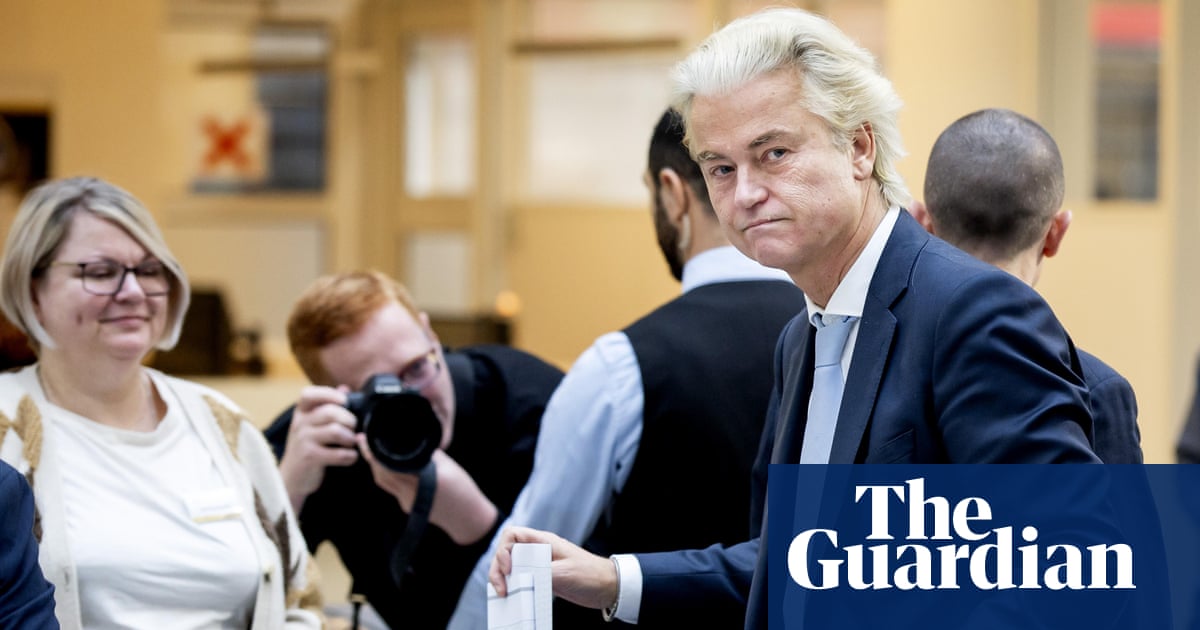

What happens when a loud, anti-establishment party is handed ministerial power? That question sat at the heart of this week’s Dutch election after Geert Wilders’ far-right Freedom Party (PVV) spent two turbulent years in government as part of a right‑wing coalition — the first time the Netherlands has been led by ministers tied to Wilders’ movement.
The immediate answer from voters appears mixed. Early exit polls pointed to disappointment with the far right and gains for the centrist Democrats 66 (D66), which looked set to take the lead in forming a new government. Mainstream parties that campaigned on excluding Wilders promised to keep him out of any coalition, whatever the PVV’s final tally. But the political and social effects of Wilders’ time in power go beyond simple electoral arithmetic.
On the issues voters identified as most urgent — housing, healthcare and asylum policy — the experiment was, by most measures, a failure. Observers and analysts say the coalition left no major reforms, few new laws and no credible solutions to the housing shortage that helped propel Wilders to victory in 2023. Today more than 80,000 people still need homes, and the crisis has only hardened into another lever for anti-immigrant rhetoric.
“On those core challenges the coalition failed to deliver, and in some cases made things worse,” says Armida van Rij of the Centre for European Reform. Political historian Koen Vossen put it more bluntly: besides a temporary relaxation of a speed limit, there is little to point to as tangible achievement. Vossen argues the reality flows from Wilders’ strengths and weaknesses: effective as an outsider demagogue, he proved poor at building the institutions and teams required to run a country.
That lack of governing capacity showed up in ministerial appointments, according to critics. Wilders’ distrust of established organisations and reluctance to build a broad administrative base left him relying on loyalists without the necessary experience. The result was unstable governance rather than the airtight implementation of the radical policies he promised on the campaign trail.
Still, failures in office have not meant the collapse of Wilders’ ideas. Many of his themes — especially hostility toward immigration and asylum seekers — have been absorbed into a rightward-shifting political centre, and even some left‑of‑centre politicians adopted tougher rhetoric during the campaign. Cas Mudde, a scholar of political extremism, warned that the shock of the PVV’s shortcomings does not erase its ideological hold. He blamed, in part, a media environment that overexposes populist voices and a political class prone to normalising the agenda.
That ideological grip complicates any simple ‘lesson learned’ narrative. For some voters the PVV’s experience in government proved that populist bombast cannot substitute for governance. Pollsters detected a clear appetite, before the election, for a return to steady, middle‑of‑the‑road politics — a longing for technocratic competence summed up in calls to “give us back the boring Netherlands.” Christian Democrat leader Henri Bontenbal even made “boring” a positive campaign slogan, pitching stability and predictable administration as an antidote to chaos.
For others, the perceived failure was not incompetence but obstruction. Within the PVV’s base there is a strong tendency to blame outside forces — judges, courts or a so‑called “deep state” — for blocking Wilders’ agenda. That interpretation, Vossen warns, mirrors the grievance narratives seen elsewhere and risks deepening anti‑institutional sentiment. If the party is barred from future coalitions, its supporters may frame that exclusion as a betrayal of the popular will, further eroding trust in democratic institutions.
There is also the danger of copycat movements. Rival far‑right groups seized on the PVV’s shortcomings to argue that they could have succeeded with better organisation and discipline. Rather than extinguishing the strain of politics that brought Wilders to power, the episode may have taught would‑be populists where the PVV fell short and how to present themselves as more competent alternatives.
In short, Dutch voters’ verdict is nuanced. Wilders’ brief spell tied to ministerial responsibility exposed the limits of a movement built around theatrical opposition: it failed to solve high‑profile problems and left a trail of mistrust. Yet the ideas that carried him into government have not disappeared; they have been normalised in parts of the political mainstream and remain potent among many citizens.
The immediate practical consequence is political uncertainty. Coalition talks in the Netherlands are likely to take months, as parties negotiate a new multi‑party government. What the next cabinet looks like — whether it reins in the polarising rhetoric of recent years or accommodates parts of the PVV agenda indirectly — will determine whether the Dutch electorate moves back toward stability or sees the deeper institutional strains continue to widen.
Whatever government emerges, the legacy of the Wilders experiment is clear: it was a failure in delivery, but not in changing the political landscape. Voters may have punished style and dysfunction at the ballot box this time, yet the broader shift in discourse and the erosion of institutional trust remain challenges that will shape Dutch politics for years to come.