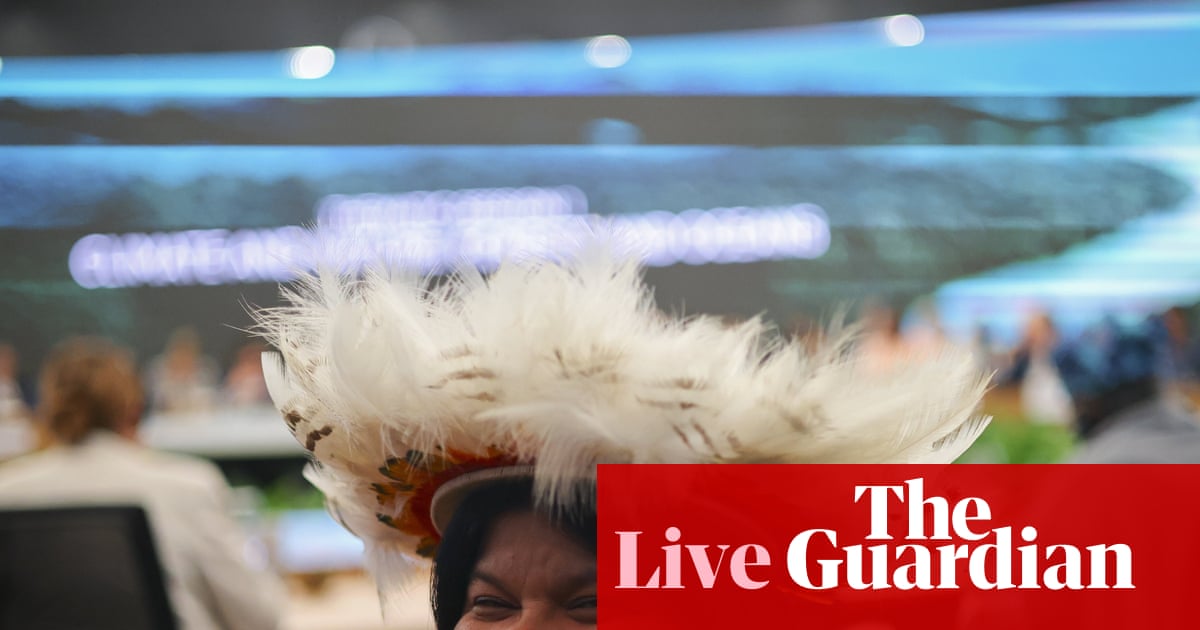

Delegates formally adopted the COP30 agenda on Monday, clearing the way for intensified negotiations while prompting warnings that critical issues such as climate finance and fossil fuels risk being marginalised. Organisers merged and shifted several items into new workstreams and created an “action agenda” designed to move forward without full consensus, a structure that some negotiators and campaigners say could sideline contentious but urgent topics.
Brazil’s veteran diplomat André Corrêa do Lago, who is presiding over the talks in Belém, opened the summit by promising this would be the ‘Cop of Truth’ and calling for immediate action as extreme weather events mount. President Luiz Inácio Lula da Silva urged a plan to reduce dependence on fossil fuels, defended the Paris Agreement, stressed ending deforestation, and highlighted the need to put Indigenous and local communities at the centre of climate responses.
While adopting the agenda avoided the lengthy procedural fights that have stalled past conferences, its design has provoked concern. By grouping items into broader streams and giving the presidency discretion to advance matters through an action agenda, some delegates fear that negotiations on finance — including the New Collective Quantified Goal (NCQG) — the Dubai-era commitment on a just energy transition away from fossil fuels, and urgent measures to stay within 1.5C could be pushed to the sidelines. Mohamed Adow of Power Shift and other advocates have argued that saving the UN process must go hand in hand with concrete outcomes: significantly more funding for vulnerable countries and a fair transition to renewable energy.
Developing countries and NGOs warned that the NCQG, which aims to mobilise $300 billion a year by 2035 and to leverage private-sector support toward $1.3 trillion, is not clearly anchored in the formal agenda items. Mercy Corps’ Debbie Hillier said the term ‘agenda fight’ understates the high stakes for countries seeking clarity, accountability and predictable finance. Brazil’s presidency has scheduled intensive consultations through the first days of the summit to explain how the agenda will function in practice.
The absence of an official US delegation on the opening day drew sharp criticism. Speakers at the plenary, including Tuvalu’s climate minister and Pakistan’s climate secretary, denounced the lack of US representation and framed the climate crisis as a major human-rights issue. Several observers noted few US media outlets were present, heightening concern that reduced US engagement will weaken pressure for ambitious outcomes.
Legal pressure ratcheted up after this summer’s International Court of Justice ruling, which underscored states’ obligations to protect the climate. Twenty-five UN special rapporteurs issued a joint call for ‘full compliance’ with international law and warned that failure to deliver meaningful mitigation, finance and technology cooperation — with explicit attention to fossil fuels and subsidies — would undermine the COP system’s credibility.
Campaigners again spotlighted the influence of fossil-fuel industry representatives at UN talks. New research released ahead of COP30 shows thousands of lobbyists from oil, gas and coal interests have attended recent conferences, representing hundreds of companies and trade groups. Critics say this corporate presence has hampered stronger action. Environmentalists and Indigenous advocates described what they called a ‘corporate capture’ of negotiations and urged tighter limits on fossil-fuel actors’ access to negotiation spaces.
Civil society groups reiterated demands for concrete results rather than symbolic pledges. Climate Action Network and other NGOs called for worker safeguards in polluting industries as part of a just transition, stronger protections for affected communities, and scaled funding for the Loss and Damage Fund created at COP28. So far, only modest pledges have been made to that fund, prompting calls for developed countries to deliver finance at scale and with urgency.
The human toll of inaction was personified by references to Hurricane Melissa, which devastated Jamaica and became a symbol for small island states facing existential threats. Former Jamaican climate director UnaMay Gordon urged accountability and payments from major emitters for catastrophic losses, stressing that keeping warming to 1.5C is a survival issue for the most vulnerable.
Forests and land rights featured prominently. A new assessment underscored the Congo Basin’s value as a carbon sink, estimating it absorbs roughly 600 million tonnes more CO2 annually than it emits, though its sink capacity has been weakened by deforestation and poor management. A Gabon- and France-led initiative at COP30 proposed raising $2.5 billion by 2030 to protect the basin. Separately, a coalition of about a dozen countries pledged to secure land rights over 80 million hectares of tropical lands by 2030 to protect Indigenous and Afro-descendant communities and help curb deforestation.
Soil and agriculture were highlighted as neglected but potent mitigation tools. A UN-backed study from the Save Soil movement found that 70 percent of countries do not include soil restoration in their nationally determined contributions. Restoring agricultural soil health could sequester a meaningful share of emissions reductions and cut fertilizer-related emissions, yet soils infrequently appear in mitigation strategies.
Media coverage itself became a talking point. The Belém media centre filled up after a slow start, but major US TV networks were notably absent. Media figures argued that newsroom cutbacks and corporate priorities have diminished climate reporting capacity at a moment when public scrutiny matters most. Many reporters said budget constraints prevent them from attending even when they want to cover the talks.
On site, logistical challenges underlined the practical difficulties of hosting a major climate summit in a rainforest city. Heavy tropical rains battered parts of the venue, some areas were uncomfortably warm, and a number of food vendors ran out of vegetarian options despite appeals to prioritise plant-based meals. Brazil’s first lady, Rosângela Lula da Silva, apologised for the heat, presented Local Adaptation Champions awards, and urged the conference to focus on implementation, truth and community-level action, with particular attention to women.
Brazil’s presidency stressed adaptation and integrating climate priorities into economic and job-creation policies, and called on parties to ‘listen and believe in science.’ The COP29 president Mukhtar Babayev urged progress on the Baku finance goals and said developed countries must lead on funding.
At the same time, environmentalists pointed to recent energy deals inconsistent with the summit’s goals, including an agreement allowing ExxonMobil to lead a major gas exploration project in Greek waters. Critics said such deals fly in the face of climate science and threaten biodiversity and tourism.
Groups including Greenpeace demanded binding commitments rather than high-profile announcements, calling for transparent finance, fossil-fuel phase-out plans, protections for environmental defenders, and stronger safeguards for affected workers and communities.
With the agenda now in place, negotiators face a crucial test: turn procedural agreement into concrete deliverables on mitigation, finance, adaptation and loss and damage. The outcomes will be shaped by how the presidency uses the action agenda, whether developed countries step up with finance, how vulnerable communities are protected, and the extent to which fossil-fuel interests influence talks. The summit’s legacy will hinge on whether COP30 becomes an implementation-focused turning point or a continuation of business as usual.