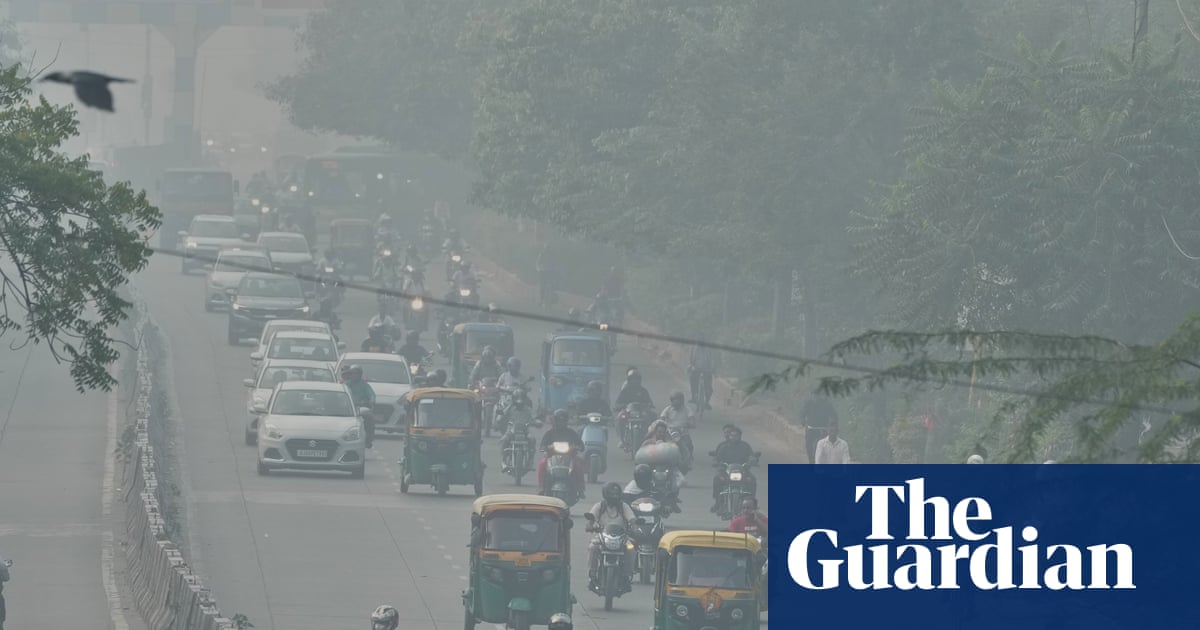

Delhi woke to a thick, toxic haze on Tuesday, a day after millions celebrated the Hindu festival of Diwali with fireworks, signaling the start of the city’s annual pollution season.
Air quality monitors registered readings in the “severe” category on Tuesday morning. Parts of the capital recorded an air quality index (AQI) above 500 — roughly ten times the World Health Organization’s recommended limit — and PM2.5 and PM10 concentrations spiked to around 1,800 in some locations, roughly 15–20 times what is considered safe.
Firecracker sales and bursting have been banned in Delhi during Diwali since 2020 because of their direct contribution to deadly winter smog. This year, however, the newly elected regional government, led by the BJP, asked the Supreme Court to relax the ban and permit so-called “green crackers” during the festival. Environmentalists have criticized green crackers as only about 30% less polluting than conventional ones.
The court allowed the limited use of green firecrackers in specific time windows. Despite the restrictions, many people ignored the curfew and there was little enforcement of whether the fireworks used were the low-pollution varieties. Monitoring stations showed pollution surging around midnight, producing some of the worst Diwali air since at least three years.
The spike prompted a cross-border blame game: authorities in Pakistan’s Punjab suggested pollutants from India contributed to the deteriorating air in Lahore after the celebrations.
Delhi’s deep, persistent air-quality crisis is not new. For more than 15 years the city has struggled with toxic smog that grows worse as winter arrives. The pollution is driven by a mix of factors: vehicle emissions, construction dust, industrial and household waste burning, and smoke from fields set alight in neighbouring Punjab and Haryana to clear crop stubble. Cool winter conditions trap the haze over the metropolitan area.
The human and economic costs are severe. Studies link Delhi’s pollution to higher rates of neurological, cardiovascular and respiratory disease, and to increased cancer risk. The smog is estimated to cause around 10,000 premature deaths each year across the roughly 33 million people living in the wider Delhi region.
Each Diwali this cycle repeats: celebrations and tradition collide with public-health imperatives, temporary court relaxations and sporadic enforcement, producing brief but intense spikes in airborne toxins that compound a long-running environmental crisis.