Sex-offender financier Jeffrey Epstein housed women who say they were abused by him in several London flats after UK police decided not to pursue an inquiry, the BBC can reveal.
Records in the US Department of Justice files show four flats rented in the affluent Royal Borough of Kensington and Chelsea. Receipts, emails and bank records in those files identify six women who lived in the properties and have since come forward as victims. Many of the women, from Russia, eastern Europe and elsewhere, were brought to the UK after the Metropolitan Police decided not to investigate Virginia Giuffre’s 2015 trafficking allegation.
The Met says it followed “reasonable lines of inquiry”, interviewed Giuffre multiple times and cooperated with US investigators. But the files suggest a wider, organised UK operation that continued up to Epstein’s arrest and death, with housing infrastructure, cross-border movement of women and some residents coerced into recruiting others.
We searched millions of pages in the Epstein files to assemble the most detailed picture yet of his UK activity. To protect victims, the BBC is not publishing identifying details about the women.
British authorities had other opportunities to open an inquiry, in addition to Giuffre’s complaint — and the BBC has identified a second woman who complained to the Met by early 2020. A document in the files also shows UK agencies knew soon after Epstein’s death that he had rented at least one of the Chelsea flats.
Human rights lawyer Tessa Gregory of Leigh Day said she was “staggered” that no UK police investigation was launched and that where there are credible trafficking allegations, the state has a legal obligation to investigate. The Met said it recognised its duties under Article 4 of the European Convention on Human Rights and was confident these were fulfilled.
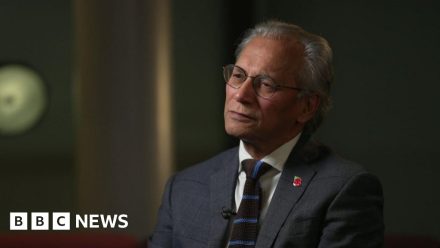
Former senior detective and first Independent Anti‑Slavery Commissioner Kevin Hyland told the BBC the police missed opportunities. Based on his trafficking experience, he said officers could have worked with travel companies to trace credit cards and IP addresses used to book tickets for groups of single women. He said Epstein “wasn’t acting alone” and urged scrutiny of who else may have been involved.
Jeffrey Epstein, landlord
Messages in the files show Epstein kept in touch with a young Russian woman living in one of the London flats in the months before his 2019 arrest. He joked that he was her landlord and, unlike most landlords, paid the rent. The woman asked Epstein for money for English classes, cutlery and furniture, and visa advice for another woman due to arrive.
Photographs posted by women linked to the flats — on Instagram, Russian social media and in fashion shoots — helped identify one tenancy when a building name visible in the background matched a tenancy agreement in Epstein’s records. A shipment of gifts, entries in a 10,000‑page credit‑card bill and emails with letting agents uncovered the other apartments. One account showed a woman on Epstein’s card with a $2,000 monthly allowance and daily living expenses recorded.
Despite desirable addresses, flats were sometimes crowded and residents occasionally slept on sofas. Emails show women complained about conditions and Epstein replied angrily in one instance, calling a woman “rude” and a “brat”. In another case he framed a rent payment as a “gift” conditional on six months’ work, otherwise a loan to be repaid.
Several women in the flats were coerced into recruiting others. One resident sent Epstein pictures of “cute” models she had met; Epstein indicated his approval and she said she would check their suitability. The files also show Epstein paid course fees at English language colleges for at least five women, many on student visas, and discussed acting as a financial sponsor for a university‑level art course.
Trafficked on Eurostar
Epstein used Eurostar to move women between London and Paris up until his 2019 arrest. The files show at least 53 Eurostar tickets for women travelling between France and England from 2011 to 2019, including 33 purchased after Giuffre’s 2015 complaint. In the last six months before his arrest, he moved women across the border 10 times; one was transported to London 16 days before his arrest. Lawyers for some of the women have confirmed that Eurostar trips in the records involved clients who later identified as Epstein victims.
In February, Paris prosecutors opened two investigations into Epstein’s activities in France, focusing on trafficking and money‑laundering; officials said three women had complained about people in Epstein’s circle.
Who worked for Epstein in the UK?
The BBC identified several people who worked for Epstein and Ghislaine Maxwell in the UK, including a man believed to have been a driver and a woman described as Maxwell’s assistant. A former household staff member from the 2000s also moved to the UK and remained in contact with Epstein; she appears in FedEx invoices and flight records and wrote affectionate emails to him as recently as 2016.
The BBC contacted these people. The driver did not respond and blocked reporters on WhatsApp. At the address of Maxwell’s former assistant the BBC found an empty house undergoing building work. At the east London block thought to house the former household staff member, the occupant declined to engage when approached and did not respond to a letter left with contact details.
What did UK authorities know?
Across statements in 2016, 2019, 2021, 2022 and 2025 the Met has said it believed international partners were best placed to progress allegations about Epstein. The force says it interviewed Ms Giuffre three times in 2015 and 2016, contacted several other potential victims and found “no allegation of criminal conduct was made against any UK‑based individual.” It also says it maintained close liaison with US and other authorities.
The National Crime Agency (NCA) is shown in a 2020 memo to the FBI highlighting allegations connected to Clare Hazell, the Countess of Iveagh, who reportedly flew on Epstein’s private jet more than 30 times. The memo says Hazell was accused of sexual abuse by a redacted complainant; Virginia Giuffre later publicly accused Hazell. The NCA also sent financial intelligence about Epstein’s UK transactions to the FBI, including payments to a Coutts account for rent on a Chelsea flat that housed victims.
The NCA said it does not routinely comment on information exchanges with international partners. A Met spokesperson said the force was “fully engaged” with a National Police Chiefs’ Council group established after the Epstein files’ release and was assessing information, including whether London airports were used as transit points for trafficking. The Met did not respond directly to the BBC’s findings about the London flats and Eurostar tickets.
Survivors and campaigners
Survivor Lisa Phillips said many women came forward in the UK through lawyers or police and called for a public inquiry to determine what went wrong and prevent future failures. Tessa Gregory said a statutory public inquiry could compel witnesses and examine how alleged abuses spanning years and public figures went undetected.
After the Epstein files were published in January, several UK police forces, including the Met, said they were making enquiries or assessing material to decide whether to open investigations. Hyland said that with a trafficking complaint and details of London properties there was “more than enough to start an investigation” and questioned why that did not happen.