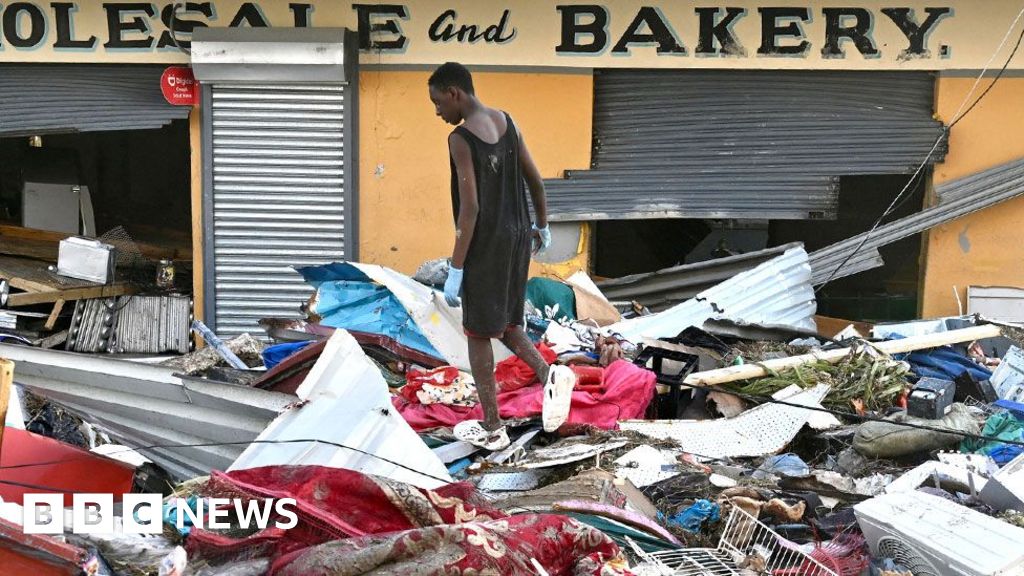

Hurricane Melissa has carved a destructive path across the Caribbean, shredding homes and infrastructure, flooding communities and killing dozens. The storm hit Jamaica at peak strength and then battered parts of Cuba and Haiti as it moved north.
Jamaica was struck directly by Melissa when it reached a Category 5 intensity — described by officials as one of the most powerful storms recorded in the region. Authorities say at least five people have been confirmed dead on the island. Officials later identified three men and a woman among the early fatalities. Many residents are still stranded on roofs and tens of thousands remain without power.
Prime Minister Andrew Holness described the scene as “total devastation,” saying that some 80–90% of roofs had been lost and that hospitals, libraries, police stations, ports and other urban infrastructure suffered severe damage. King Charles said he was “deeply concerned” and “profoundly saddened” by the loss and appealed for renewed attention to restoring balance with nature for those whose lives and livelihoods have been shattered.
Scenes from across central Jamaica show flattened towns and streets choked with debris. Montego Bay’s mayor reported that roughly half the city had been cut off by floodwaters and that immediate priorities were to confirm people’s safety. Residents told of roofs ripped away and houses reduced to rubble; in one account, a woman’s recently built concrete seaside home was completely destroyed. Officials say the clean-up and recovery will take months.
Melissa weakened to Category 3 as it moved toward Cuba, where sustained winds near 115 mph (185 km/h) and heavy rain struck the southeastern provinces, including Santiago de Cuba. Local residents described the storm as terrifying and compared its sound to a tornado. Cuban President Miguel Díaz-Canel urged people to remain vigilant and credited preparation for reducing harm.
At one stage the storm slowed and then resumed a northeasterly track. Meteorologists reported Melissa about 105 miles (170 km) from the central Bahamas with winds near 100 mph (155 km/h), raising the risk of a dangerous storm surge in parts of the Bahamas before the system heads further north toward Bermuda. Tropical storm warnings were issued for the Turks and Caicos Islands, and forecasters said the hurricane’s forward speed would likely increase in the coming days.
On Haiti’s southern coast, authorities reported at least 20 deaths, including 10 children, after rivers burst their banks and intense flooding and landslides swept through communities. Flash floods forced thousands into shelters and washed away many coastal homes. Aid workers described people clearing debris by hand and widespread loss of crops and roofs across the hardest-hit areas.
International assistance has begun to mobilize. The United States said it was sending a disaster response team to Jamaica to assess needs, and officials confirmed that formal requests for aid had been made by Haiti and the Bahamas.
Forecasters do not expect Melissa to make landfall on the North American mainland, but they warned it would remain a powerful extratropical cyclone as it approaches Newfoundland later in the week.
Local and national responders in the affected countries have cautioned that casualty figures may rise as floodwaters recede and search-and-rescue teams reach isolated communities. Recovery will depend on restoring power, clearing debris, repairing homes and supporting people left homeless or cut off from basic services.