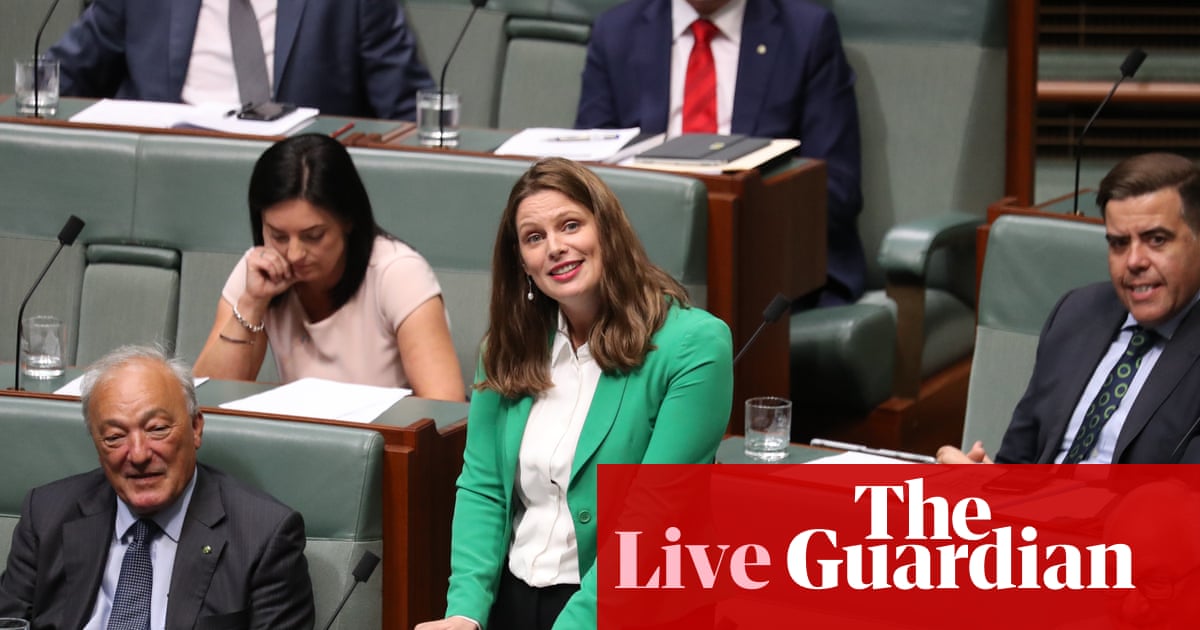

Kate Ellis, the former federal member for Adelaide, has been elected national president of the Australian Labor Party and will take over from Wayne Swan at the party’s national conference in Adelaide in July 2026.
Ellis represented the seat of Adelaide from 2004 to 2019 and served as a minister in the Rudd and Gillard governments between 2007 and 2013. Since leaving parliament she has led charities focused on early childhood development and substance‑abuse prevention. In a statement she thanked Swan for his leadership and support and said she was looking forward to helping keep Labor “strong, energised and focused on the challenges ahead.” Rhiannyn Douglas, a high‑school teacher from Brisbane’s outer suburbs, was elected national vice‑president alongside returning vice‑president Mich‑Elle Myers.
Other key developments covered today:
– Environmental laws: The government introduced its bill to rewrite the Environment Protection and Biodiversity Conservation Act in the House of Representatives. Labor says the package follows the independent Samuel review and aims to strengthen protection, speed up assessments and improve accountability. The bill faces opposition: the Greens’ Larissa Waters warned the draft contains major loopholes, saying critics could “drive a mining truck” through them, and the Coalition’s Angie Bell said it was not their job to “make a bad bill better.” Environment minister Murray Watt has insisted the laws include a “really high bar” for national‑interest interventions and has said the government’s policy is zero new extinctions.
– Senate confrontation and transparency row: Independent senator David Pocock led a crossbench revolt to force extra non‑government questions in Senate question time while pressing for release of a government report on board appointments. The move has escalated tensions in the chamber and prompted suggestions the government may retaliate by stripping Coalition senators of committee roles.
– Parliament and question time: Question time saw repeated shouting matches as ministers gave curt answers in the extended session. A formal complaint has been filed alleging Barnaby Joyce launched a “verbal tirade” at a Nationals staffer; Joyce denies the allegation.
– Energy and economy: Energy minister Chris Bowen said consumers should see lower retail electricity prices after wholesale costs fell nearly 40% in the September quarter, driven by record renewables output. Treasurer Jim Chalmers told business audiences no major new economic measures would be introduced before the May budget, saying the mid‑year update would be an update rather than a mini‑budget.
– Industrial action and state politics: Prison officers in New South Wales staged a state‑wide walkout in protest at the handling of the assault of four guards earlier this year. In Victoria, changes to voluntary assisted dying laws passed the lower house with the government relying on crossbench support, including One Nation, to progress the reforms.
– Business and activism: Woolworths told investors its sales were damaged by distraction from regulatory inquiries, industrial action and executive change. Environmental group Rising Tide painted “TAX ME” on the side of a coal ship in Newcastle to call for a windfall profits tax on fossil fuel exports.
– International diplomacy: Prime Minister Anthony Albanese attended APEC meetings in South Korea and dined with US president Donald Trump; the government welcomed a separate US‑China announcement on rare‑earth cooperation as beneficial for Australia’s trade and investment outlook.
These items, alongside routine parliamentary exchanges and other briefings, summed up a busy day of politics, policy debate and industrial action.