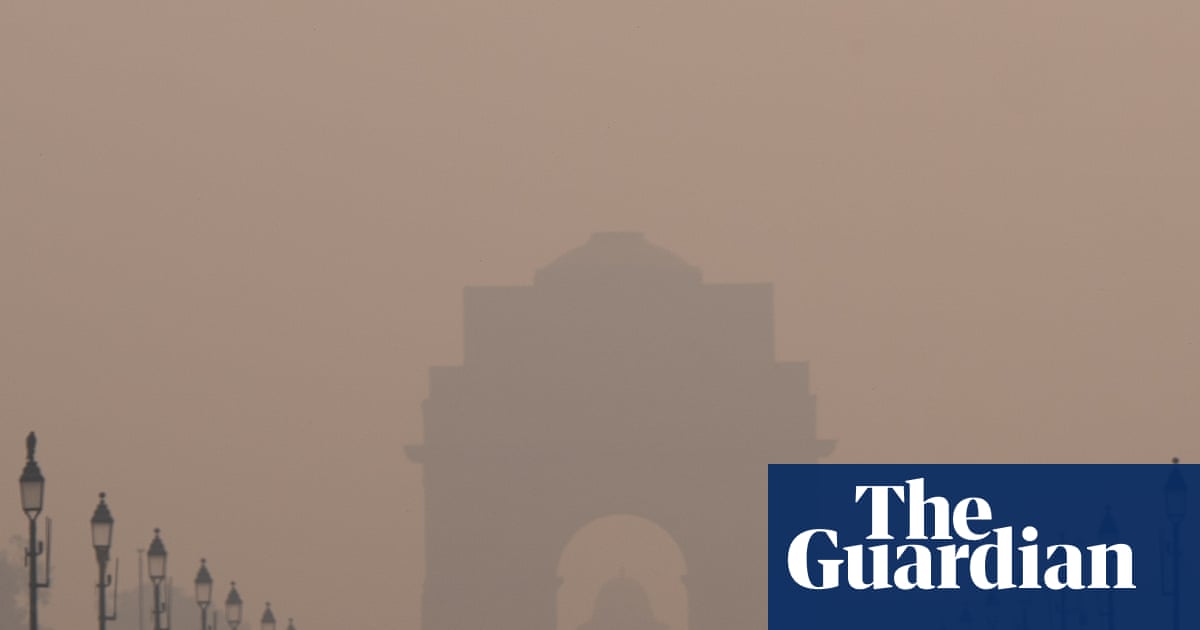

Delhi’s regional government has begun trialling cloud seeding in an effort to trigger artificial rain and reduce the city’s severe air pollution.
The initiative has been pushed by the Bharatiya Janata Party (BJP) since it took charge of the regional administration earlier this year. Officials say aircraft and drones will release particles such as silver iodide into clouds; those particles act like ice nuclei, encouraging water droplets to cluster and increasing the chance of precipitation.
The programme was delayed by weeks of unpredictable weather, but was restarted after air quality in the capital plummeted into the hazardous range following the Diwali festival. The environment minister, Manjinder Singh Sirsa, said the first trial flight — during which seeding flares were released — took place on Thursday. The city’s chief minister, Rekha Gupta, added that if conditions stayed favourable Delhi could see its first artificial rain on October 29.
Scientists and atmospheric experts caution that cloud seeding is not a cure-all. The technique is intended to make clouds produce more or heavier rain than they otherwise would, but measured effects are often modest. Crucially, the method only works when suitable cloud cover is present; wintertime, when Delhi’s pollution typically peaks, is often dry or cloud-free, limiting the opportunity for seeding to help.
Two professors from Delhi’s Centre for Atmospheric Sciences, Shahzad Gani and Krishna AchutaRao, criticised the plan as a gimmick, saying it misapplies science and skirts ethical concerns. They compared it to earlier high-cost engineering attempts, notably the so-called smog towers erected by a previous government, which cost large sums but did not meaningfully improve air quality.
Experts also warn of uncertainties about the long-term consequences of repeatedly dispersing chemicals such as silver iodide or salt into the atmosphere. There is limited research on potential impacts on crops, soils and human health from sustained use, they say.
Critics argue that such interventions do not address the root causes of Delhi’s pollution: seasonal crop residue burning in surrounding states, emissions from factories and power plants, and heavy road traffic. During winter these emissions are trapped close to the ground by cooler air, causing dangerous spikes in fine particulate matter (PM2.5 and PM10).
Delhi has been ranked among the world’s most polluted cities for more than a decade. In 2024, overall pollution levels rose by about 6%, driven by that mix of sources and meteorological conditions that concentrate pollutants over the city. Winter PM2.5 and PM10 concentrations regularly exceed the extreme peaks seen during Beijing’s 2013 “airpocalypse,” before China implemented sweeping measures to cut emissions.
Officials framing cloud seeding as a short-term mitigation measure hope it will bring temporary relief when pollution surges coincide with suitable weather. Scientists urge that any experimental deployment be paired with careful monitoring of outcomes and environmental impacts, and emphasise that long-term improvement requires cutting emissions at source rather than relying on weather modification alone.