
Israel carried out another airstrike in Gaza on Wednesday, killing at least two people, after an overnight bombardment the military says left at least 104 Palestinians dead, including many children. The fresh strike came amid intense international concern over whether a fragile, US-brokered ceasefire could hold.
The Israeli military said the latest attack hit military infrastructure in Beit Lahia in northern Gaza where weapons were allegedly stored for an imminent attack. Gaza’s largest hospital, Al-Shifa in Gaza City, reported receiving two bodies from the strike.
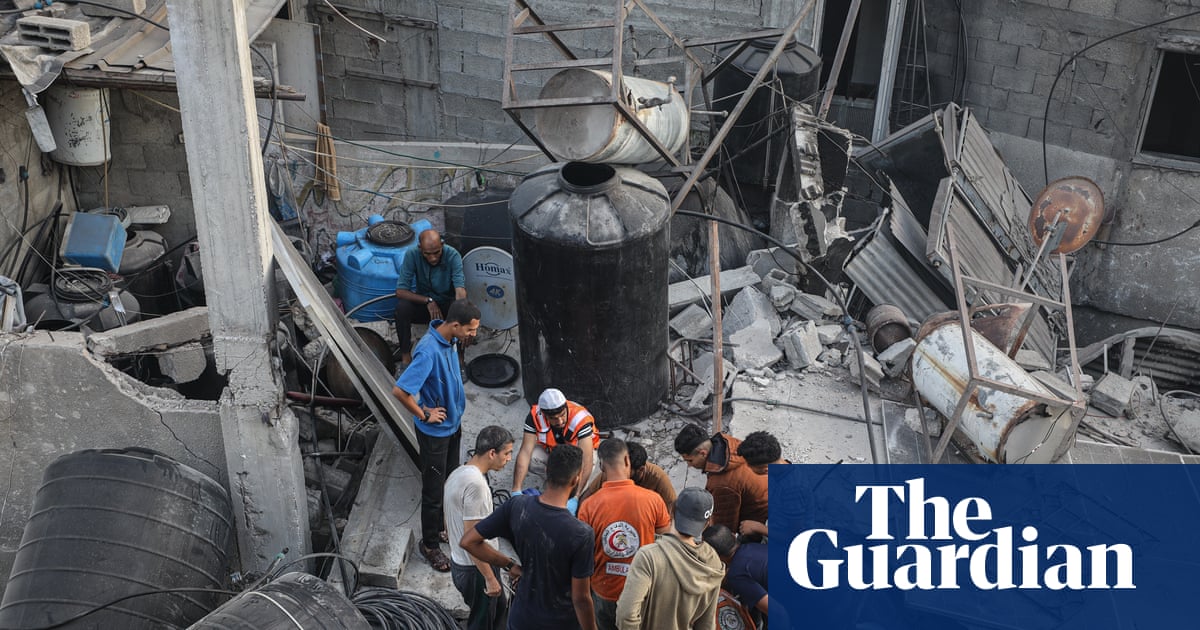
Tuesday night’s bombardment — which Gaza’s civil defence described as among the bloodiest attacks since the war began — killed at least 46 children and 20 women and injured about 200 people, the agency said. The military released an infographic claiming it had killed 25 “terrorists” in the previous 24 hours but did not identify the other 79 people who died.
Before Wednesday’s strike, Israel had said it was again adhering to the ceasefire and some US officials signalled they did not view the truce as broken. The new strike, however, raised doubts about Israel’s willingness to stop operations entirely under the agreement, which requires both parties to halt attacks.
Funerals for the victims were held across Gaza on Wednesday, with families mourning children and other relatives carried into hospitals by loved ones. “These are massacres,” said Haneen Mteir, who lost family members and attended a funeral outside Nasser hospital. “They burned children while they were asleep,” she told the Associated Press.
Israel’s foreign ministry blamed Hamas for the violence and attributed the high civilian death toll to militants using civilians as human shields. Hamas denied responsibility for a gun attack that preceded the strikes and accused Israel of seeking to undermine the ceasefire and impose new realities by force, while saying it would continue to adhere to the agreement.
Gaza civil defence officials said among the sites hit was the Insan camp for cancer patients. Mohammed al-Munirawi, a reporter for Palestine Newspaper, was reported among the dead, bringing the territory’s total of journalists killed by Israeli actions to 256, according to Gaza’s media office. An AFP tally of reports from medical officials at five Gaza hospitals confirmed the casualty figures.
Israeli prime minister Benjamin Netanyahu ordered the strikes after a firefight between Palestinian militants and Israeli troops and amid anger over the transfer of body parts of a hostage recovered two years earlier. Hamas, which denied carrying out the gun attack, delayed a planned handover of another hostage’s remains following the bombardment.
US president Donald Trump said on Wednesday that nothing would jeopardise the ceasefire but also remarked that Israel “should hit back” if its soldiers were killed. US vice-president J.D. Vance described the ceasefire as holding despite “skirmishes.” Qatar’s prime minister said intensive diplomatic efforts were underway to prevent the truce collapsing.
Gaza’s civil defence described the situation as “catastrophic and terrifying,” saying strikes had hit tents for displaced people, homes and areas near hospitals. The Israel Defence Forces said it would continue to uphold the ceasefire but would respond “firmly to any violation.” When asked about the prospect of resuming a full-scale invasion, an IDF spokesperson said the military could not yet elaborate on the scale.
The IDF published footage it said showed Hamas members reburying a body to “stage a false discovery” for the International Committee of the Red Cross; the ICRC condemned what it called an unacceptable fake recovery. The strikes have also provoked anger inside Israel, with hardline ministers calling on Netanyahu to resume full military operations.
Under the ceasefire, Hamas is required to return the remains of all Israeli hostages; in exchange Israel agreed to release 15 Palestinian bodies for each Israeli. Hamas has returned the remains of 15 hostages so far, while 13 bodies reportedly remain in the territory. The group has said it has lost contact with some units that had been holding captives, attributing gaps to the effects of intense fighting.
Israel has made the disarmament of Hamas a central goal of its campaign, a demand Hamas’s chief negotiator, Khalil al-Hayya, said is tied to what the group calls occupation and aggression. It remains unclear how disarmament, governance of Gaza and the fate of the hostage remains will be resolved as diplomatic efforts continue.